The gold ETF that delivers physical gold


The gold price has shot above US$5,000 as investors seek out its safety.
The problem for many investors is that an investment in gold can involve hefty insurance and storage costs (and long lines).
An ETF like NUGG overcomes that, but for investors who would prefer the ability to ‘hold’ their gold investment, an additional feature of NUGG is that it is physically redeemable - an investor may redeem their NUGG ETF units for gold bullion, which can be transferred into their Perth Mint account and then physically sent to them.
This has become popular among NUGG investors, and we have successfully facilitated a handful of these redemptions recently.
The gold fund that delivers
Recently, several of NUGG’s investors have utilised its physical redemption facility.
One of the features of the VanEck Gold Bullion ETF (NUGG) is that investors can convert their investment in NUGG to physical gold bullion. An investment in NUGG is physically backed by gold bullion held in a vault at The Perth Mint.
There are a few simple steps to follow to facilitate the physical redemption process. These are outlined in this flyer – click here.
Once the redemption request has been received, you will be sent an estimate of the gold ounces that will be transferred to your Perth Mint Depository Online (DOL) Account. You will also be told the estimated time it will take to complete the redemption, which is when the gold will be transferred to your DOL account at The Perth Mint.
Once the gold is in your DOL account at The Perth Mint, you are no longer an investor in NUGG. At this point, The Perth Mint will be managing your gold and can help you with any further enquiries related to your gold investment. This includes determining how you would like to receive the gold (e.g. in-person collection or postage) and in what format. Costs associated with receiving the gold will depend on the method of delivery and the fabrication costs based on the amount of gold or product selected.
Australian Origin Gold is only available in certain formats. All options available to you will be detailed in your account on The Perth Mint website.
This year, we have successfully facilitated several physical redemptions, such as the one below sent to us by client. It is important to note that the minimum amount that can be converted to gold is one troy ounce. If the requested conversion amount is less than one troy ounce, The Perth Mint cannot accommodate the transfer to physical gold.
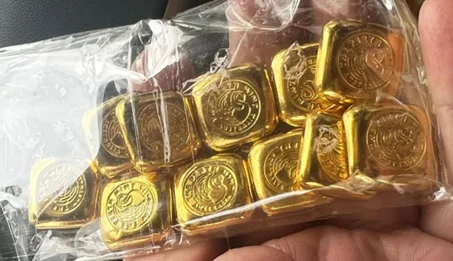
This makes NUGG a cost-effective way for investors to access physical gold. It overcomes the burden of insurance and storage costs, but still provides investors a way to be able to ‘touch and feel’ their gold investment upon redemption, if they wish.
How is the amount of gold calculated?
The amount of gold you receive is dependent on how many ETF units you hold in NUGG. Each ETF holding is entitled to a weight of gold known as the ‘gold entitlement’. To determine the amount of gold, you multiply your ETF holdings in NUGG by the ‘gold entitlement’.
The gold entitlement is published on the VanEck website. We estimate, as of today, that you would need 101 units to redeem an ounce of gold.
Backed by physical gold bullion bars, NUGG has among the lowest management fees among physically-backed gold ETFs on ASX.
50+ years of gold investing leadership
VanEck’s global leadership in gold investing extends more than 50 years, encompassing gold stocks and bullion. VanEck launched the US’s first gold equity strategy in 1968 and issued the first gold miners ETF (GDX) on NYSE in 2004.
A word on miners
The boost in the gold price is flowing through to support the bottom-line growth of those companies involved in digging it from the ground. Mining stocks stand to benefit from improving profitability. The chart below is the most recent all-in sustaining costs (AISC) curve published by the World Gold Council. It shows that nearly all global gold production remains profitable when the prices were at ~$3,800/oz. The gold price is now above US$5,000.
Chart 1: Q3 2025 AISC curve
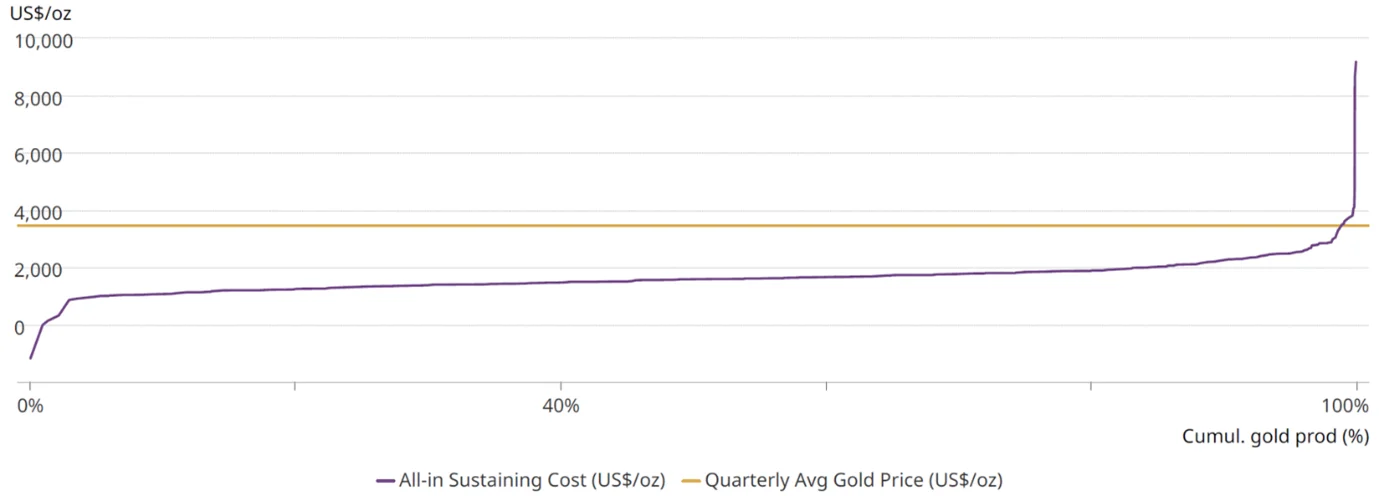
Source: World Gold Council, Metals Focus Gold Mine Cost Service, September 2025.
All in sustaining costs, for the industry, according to the World Gold Council, were ~US$1,600 at that time. Implying a margin of around $2,200. Accounting for any labour and input cost rises, it's likely the margin has increased by another ~US$1,000 since September 2025 as the price of gold has risen.
Chart 2: Production costs AISC chart
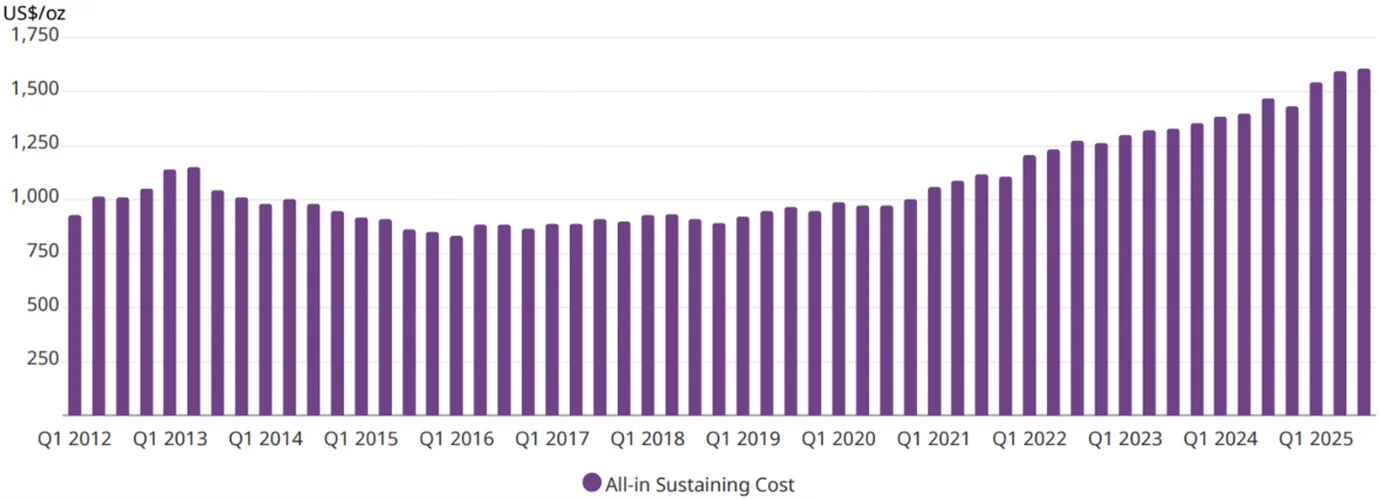
Sources: World Gold Council, Metals Focus Gold Mine Cost Service, September 2025.
Accessing gold with the specialists
Two ETFs for portfolio considerations:
- NUGG – accessing physical gold, that ‘delivers’
- GDX – investing in a diversified portfolio of gold mining companies
Key points of NUGG:
- NUGG’s gold is only sourced from Australian gold producers whose operations adhere to the LBMA Responsible Gold Guidance.
- Gold bullion is held by The Perth Mint with a registered gold bar list published daily.
- In addition to trading on the ASX, investors are able to convert their ETF holdings into physical gold bullion.
Key points of GDX:
- With one trade on the ASX, GDX gives investors instant access to 92 of the largest and most liquid global gold mining companies.
- With over 50 years of experience managing gold equities, VanEck has the longest tenure among global asset managers in the gold sector.
- Research support with GDX having been awarded ratings of:
We believe that an unhedged exposure is the best way for Australian investors to access this asset class – click here.
Key risks of NUGG and GDX:
An investment in NUGG or GDX carries investment risk. These risks vary depending on the fund and may include gold pricing risk, currency risk, custody risk, Australian sourced gold bullion risk, ASX trading time differences, financial markets generally, individual company management, industry sectors, country or sector concentration, political, regulatory and tax risks, fund operations and tracking an index. See the PDSs and TMDs for details on risks.
NUGG is likely to be appropriate for a consumer who is seeking capital growth, is intending to use the product as a minor or satellite allocation within a portfolio, has no investment timeframe, and has a high or very high risk/return profile.
GDX is likely to be appropriate for a consumer who is seeking capital growth, is intending to use the product as a minor or satellite allocation within a portfolio, has an investment timeframe of at least 5 years, and has a very high risk/return profile.

Published: 30 January 2026
Any views expressed are opinions of the author at the time of writing and is not a recommendation to act.
VanEck Investments Limited (ACN 146 596 116 AFSL 416755) (VanEck) is the issuer and responsible entity of all VanEck exchange traded funds (Funds) trading on the ASX. This information is general in nature and not personal advice, it does not take into account any person’s financial objectives, situation or needs. You should consider whether or not an investment in any Fund is appropriate for you. Investments in a Fund involve risks associated with financial markets. These risks vary depending on a Fund’s investment objective. Refer to the applicable product disclosure statement (PDS) and target market determination (TMD) available at vaneck.com.au for more details. Investment returns and capital are not guaranteed.