Investing through geopolitical shocks


Oil has surged, inflation risks are rising and markets are reacting fast.
As the saying goes, “History doesn’t repeat, but it often rhymes.” For investors, reflecting on previous market episodes is a great way to stay calm during a storm. History provides perspective, to assess risks more objectively, and potentially enable staying ahead of the curve.
The recent flare-up in tensions between the United States and Iran has once again highlighted the fragility of key global chokepoints, particularly the Strait of Hormuz, which supplies roughly 20% of global seaborne oil trade.
This realisation has seen oil prices surge to US$110 per barrel, a 100% increase in just a few days, and markets price in an increased probability of a stagflationary environment, higher inflation and lower growth. Evident with equity markets falling alongside government bond yields rising.
What is remarkable about this move is the speed. Historically, oil shocks have tended to build more gradually as the global economy adjusted to a new geopolitical reality. During the 1973 Yom Kippur War, 1979 Iranian Revolution and 1990/91 Gulf War, prices rose, peaking 209%, 149% and 93% higher respectively, over many months not days.
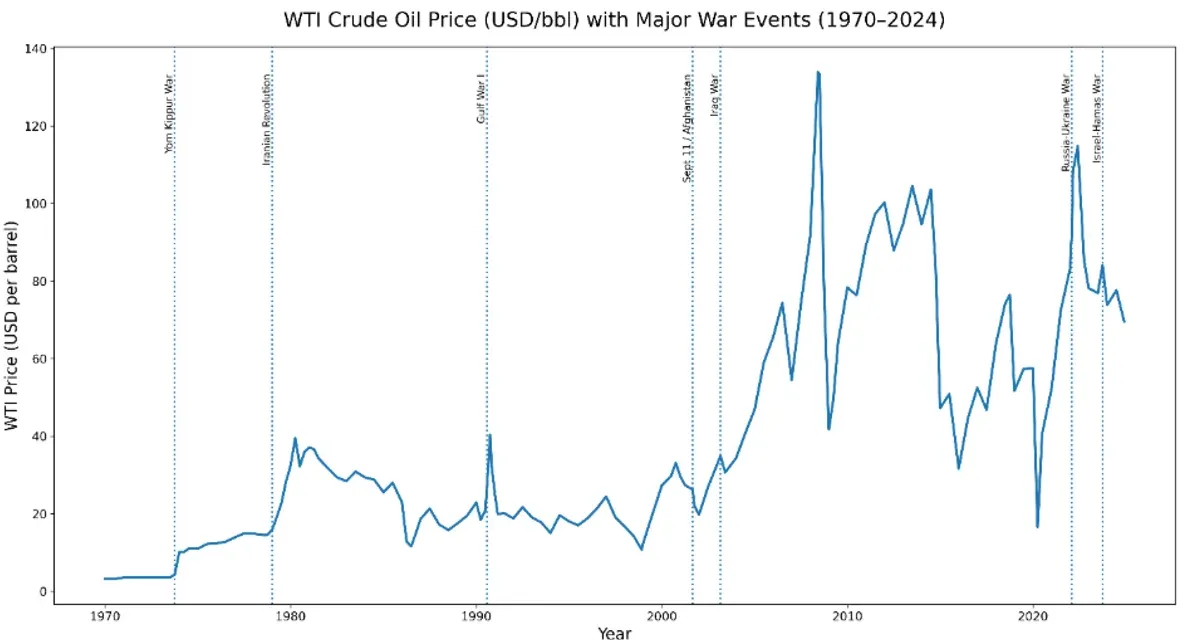
Source: U.S. Energy Information Administration (EIA), USD terms.
The speed of the recent oil price move, relative to comparable historical shocks, highlights a market that is increasingly sensitive to perceived risk. It also reflects the digital information age in which we now operate, where news is disseminated instantly and investors can respond just as quickly. When investors are reacting before the full narrative has taken shape, positioning around headlines rather than settled facts, volatility intensifies.
If tensions persist, we could see inflation accelerate, with weakening confidence and economic growth, like previous episodes.
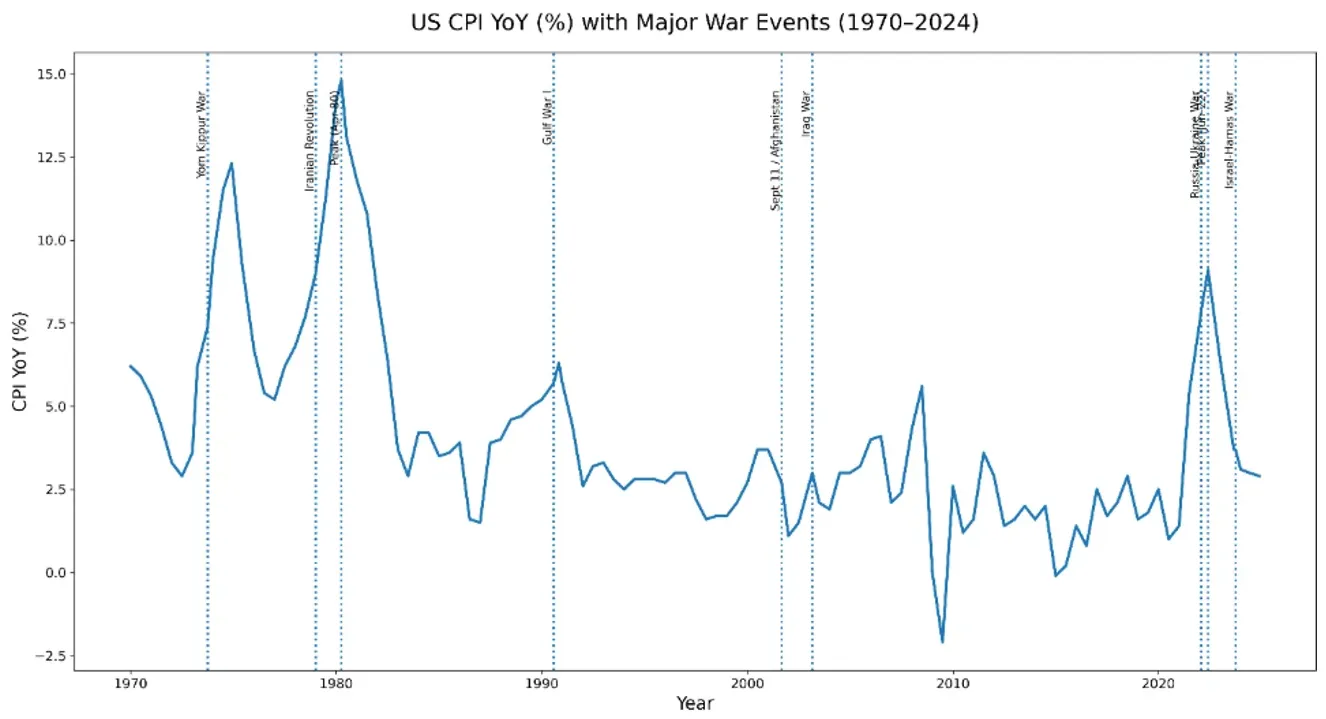
Source: U.S. Bureau of Labor Statistics (BLS).
Investor discipline is key.
Irrational selling creates opportunities, but successful long-term investors survive short-term volatility by sticking to investment principles that have withstood the test of time. Portfolio diversification is crucial.
In these environments, investors should consider assets that have historically demonstrated resilience during geopolitical oil price led shocks. The gold price surged during the 1970s as high inflation persisted and confidence in financial assets tempered.
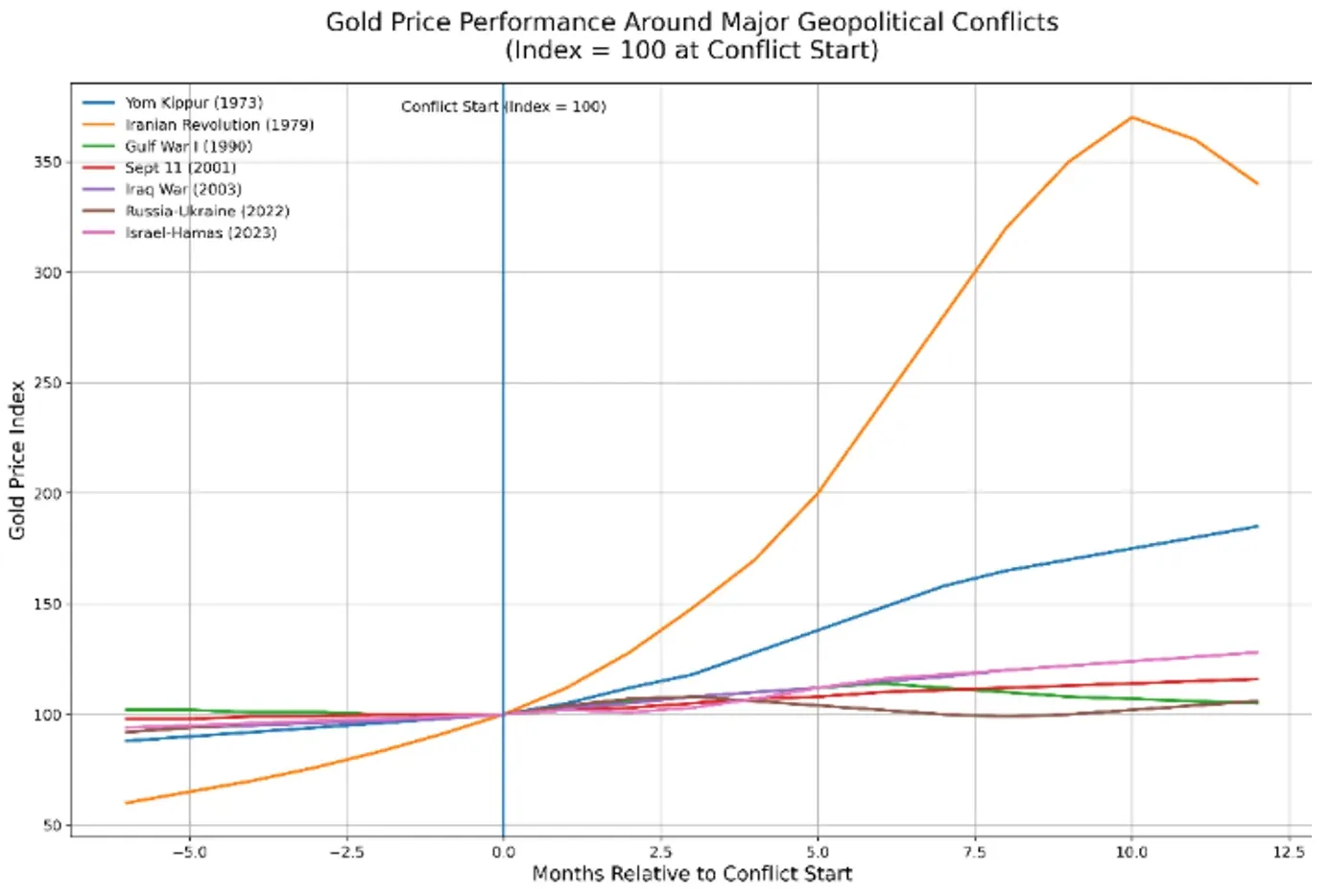
Source: London Bullion Market Association (LBMA). You cannot invest in an index. Past performance is not indicative of future performance.
This period also saw the value factor outperform, as investors sought lower valuation multiple companies with strong cash flow and pricing power. Quality companies have also shown resilience during volatile market periods, those with low financial leverage, stable earnings and high return on equity. Real assets, such as listed infrastructure, may also fare better as revenue streams are typically inflation linked and investors preference getting exposure to tangible, physical assets.

Published: 12 March 2026
Any views expressed are opinions of the author at the time of writing and is not a recommendation to act.
VanEck Investments Limited (ACN 146 596 116 AFSL 416755) (VanEck) is the issuer and responsible entity of all VanEck exchange traded funds (Funds) trading on the ASX. This information is general in nature and not personal advice, it does not take into account any person’s financial objectives, situation or needs. You should consider whether or not an investment in any Fund is appropriate for you. Investments in a Fund involve risks associated with financial markets. These risks vary depending on a Fund’s investment objective. Refer to the applicable product disclosure statement (PDS) and target market determination (TMD) available at vaneck.com.au for more details. Investment returns and capital are not guaranteed.