US earnings season: back to the basics


The fourth quarter earnings season is close to a wrap-up in the US.
The US fourth quarter of FY25 earnings season is entering its final week.
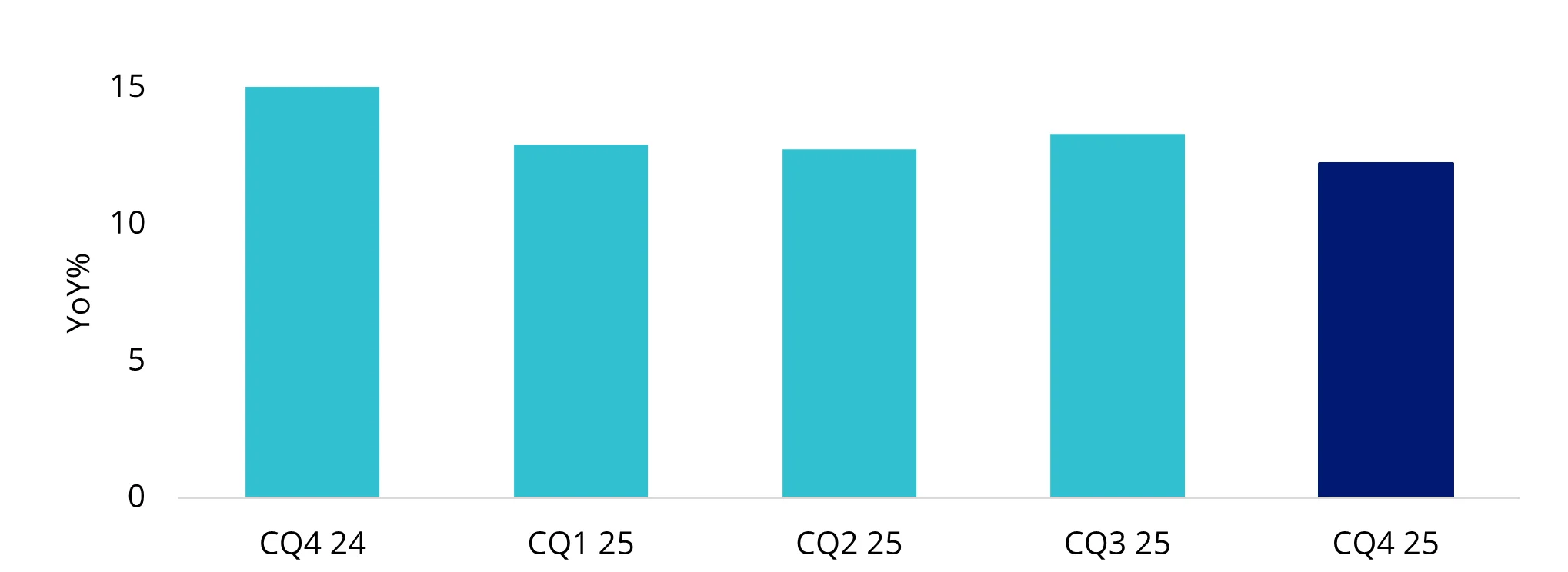
Headline statistics highlight a softening trend, with about 76% of companies beating consensus, just below the 10‑year average. Nonetheless, EPS growth remains strong at ~12.2%, and the average 1-day price reaction has been slightly positive at 0.2%.
Charts 1 & 2: Historical EPS beat rate & Q4 earnings surprises
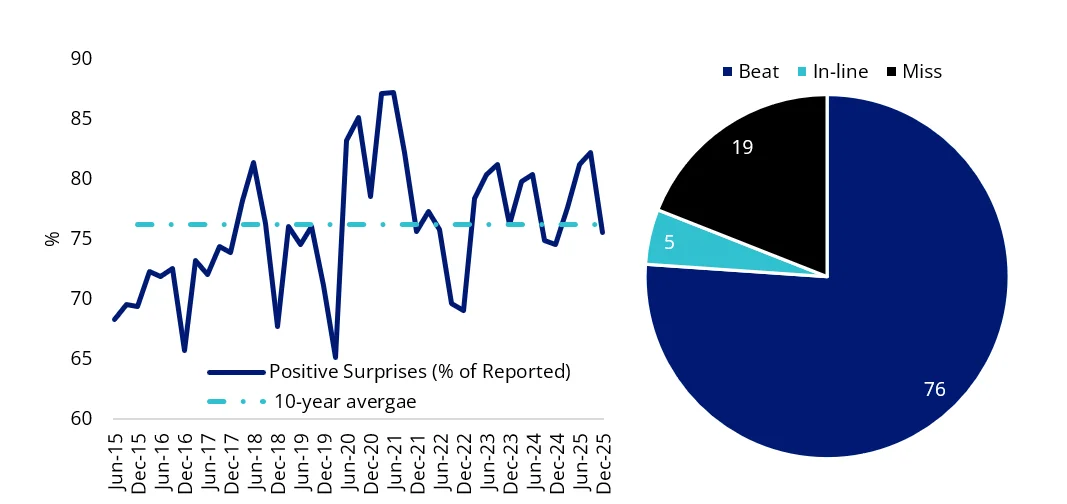
Chart 3: Historical average EPS growth
Source for Charts 1, 2 & 3: VanEck. Bloomberg Intelligence. Data as of 16 February 2026. 369 out of 500 companies in the S&P 500 Index have reported.
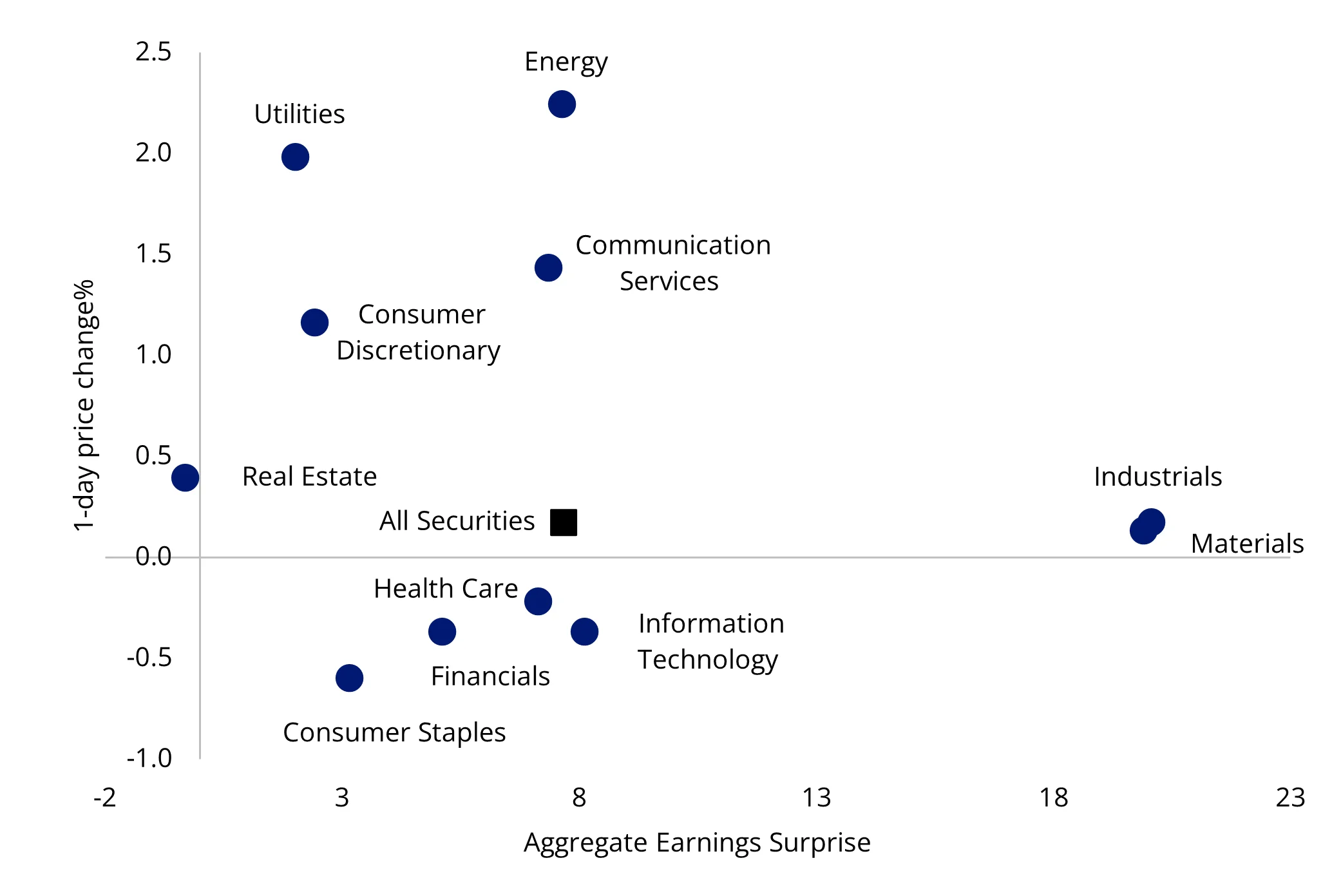
From a price‑reaction perspective, as shown in the Chart 4 below, while most sectors have experienced positive price moves post‑earnings, resulting in a marginal gain at the index level, information technology has lagged despite strong results. By contrast, energy and utilities, the ‘unloved’ sectors in recent years, have started to show strength.
Chart 4: Q4 2025 aggregate earnings surprise vs 1-day price reaction - by sector
Source: VanEck. Bloomberg. Performance in USD. Data as of 17 February 2026. Sectors are represented by S&P 500 sector indices. You cannot invest in an index. Past performance is not indicative of future performance.
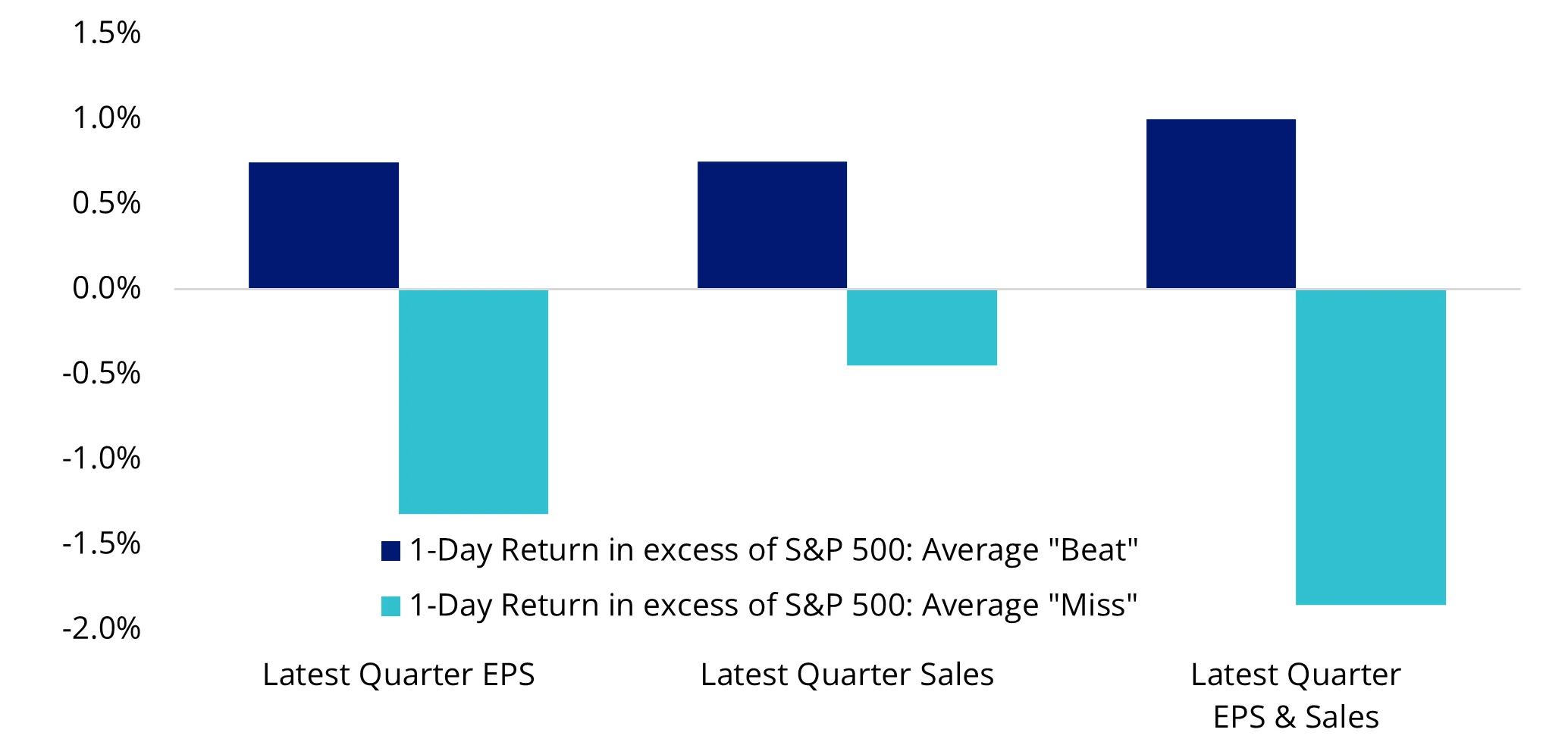
Similar to the prior quarter, this earnings season saw punitive share price declines for companies that missed street expectations, reinforcing a cautious undertone in risk appetite.
Chart 5: Earnings misses are met with outsized price declines
Source: VanEck. Bloomberg Intelligence. Date as of 13 February 2026. Performance in USD.
We dive deeper into the key themes in the following section.
Information technology: It may be too early to ‘buy the dip’
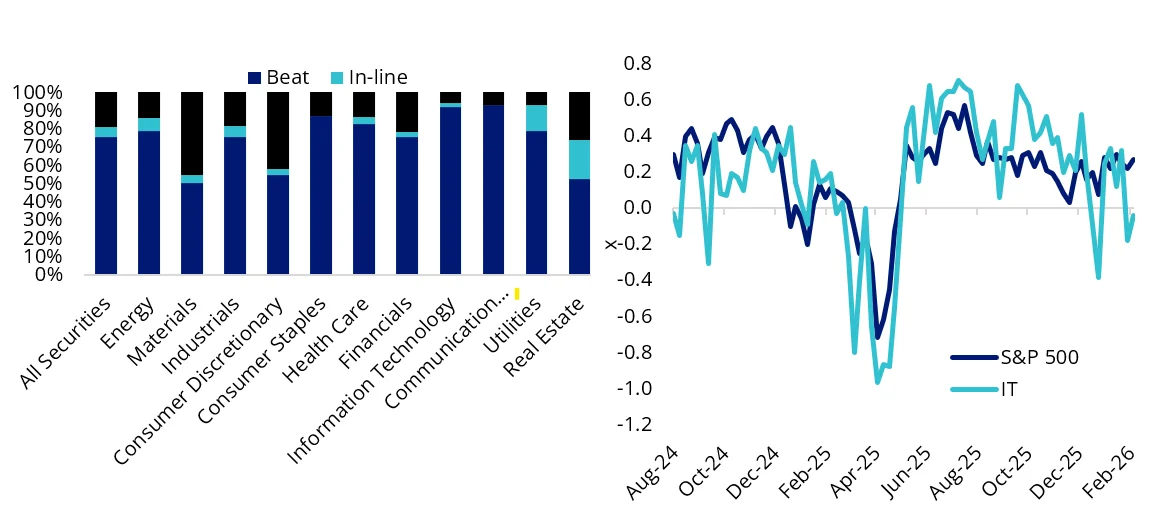
US tech names have been the unmistakable winners in the past few years, from both earnings and performance perspectives. However, since the second half of 2025, the sector has been overshadowed by fears of a potential ‘AI bubble’ burst. Impacted by the Anthropic-driven SaaS turmoil in early February, 2026 has seen sentiment cool further. As a result, despite Information Technology companies continuing to deliver almost flawless results with a beat rate of 92%, markets seem to have reservations about forward earnings guidance considering the weigh up of elevated valuations and substantial AI Capex committed primarily through increasing debt issuance.
Factoring in recent headwinds, street analysts have also dialled back near-term price targets, resulting in a meaningful pullback in net revision momentum.
Chart 6&7: Sector breakdown of earnings & Net revision momentum
Source: VanEck. Bloomberg. Data as of 17 February 2026, in USD. Net revision momentum is calculated as (positive revisions – negative revisions) / total revisions. Sectors are represented by S&P 500 sector indices.
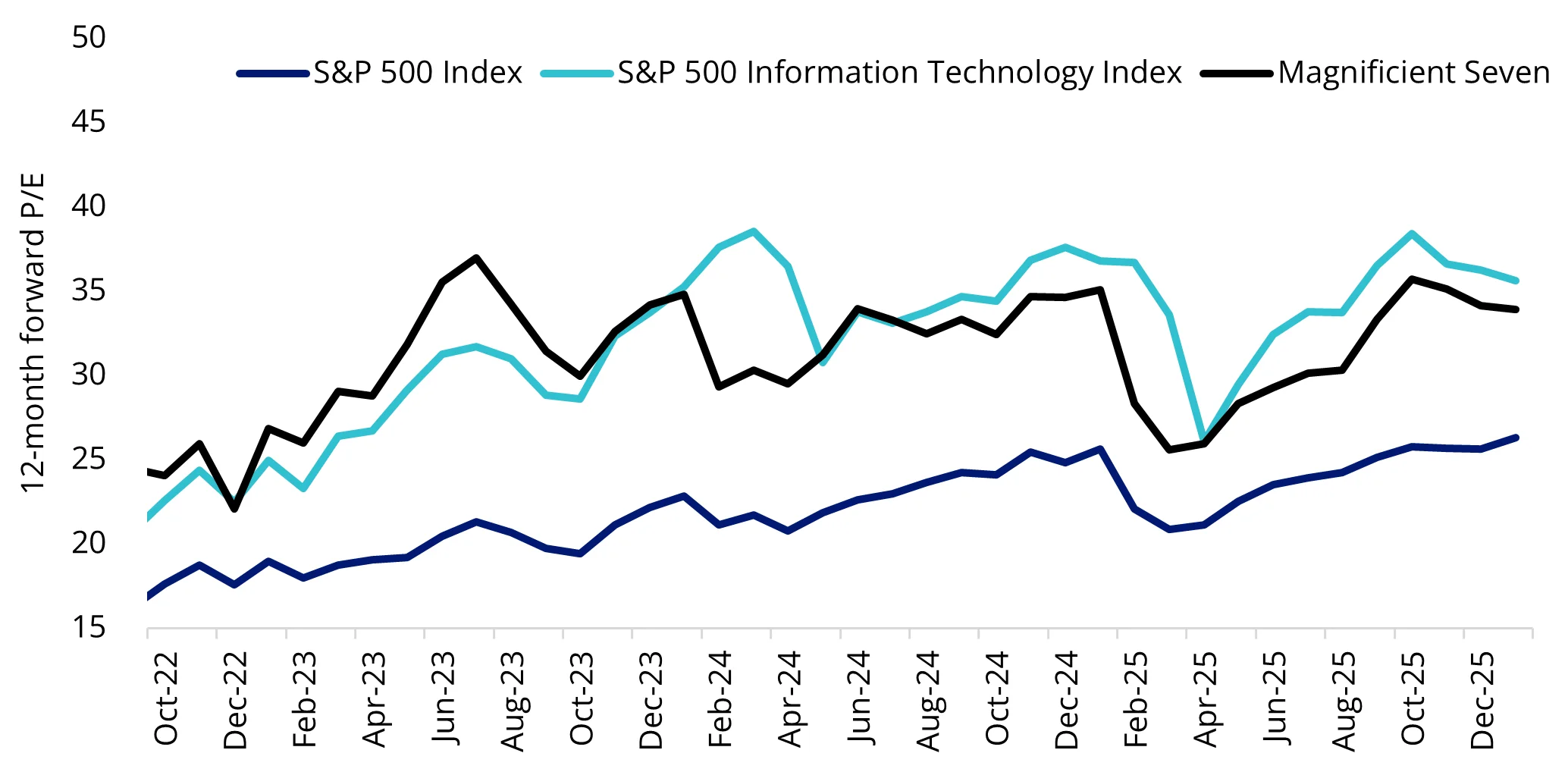
From a valuation standpoint, tech bucked the rising trend of the S&P 500 and have retreated from the peak levels reached in October 2025, but valuations remain stretched, indicating their vulnerability to headline shocks over the near term. With this context, while we acknowledge the fundamental strength and medium‑term growth outlook of US tech, recent weakness reinforces the importance of taking a diversified investment approach.
Chart 8: Tech valuations retreated from peak levels but still stretched
Source: Bloomberg. Magnificent Seven is Bloomberg Magnificent 7 Total Return Index. Date as of 31 January 2026.
Energy and utilities: ‘unloved’ sectors back in the sun
Tailwinds have started to gather for energy-lined sectors over the past few months. Accelerating power demand from data centres, a resurgence of geopolitical uncertainty, and mega-scale energy investment deals, including Japan’s $36 billion investment in US oil, gas and critical mineral projects announced during this earnings season, are supporting energy and utilities names. Furthermore, with most reporting companies beating both headline and revenue expectations, it highlights the underappreciation and strength of these sectors.
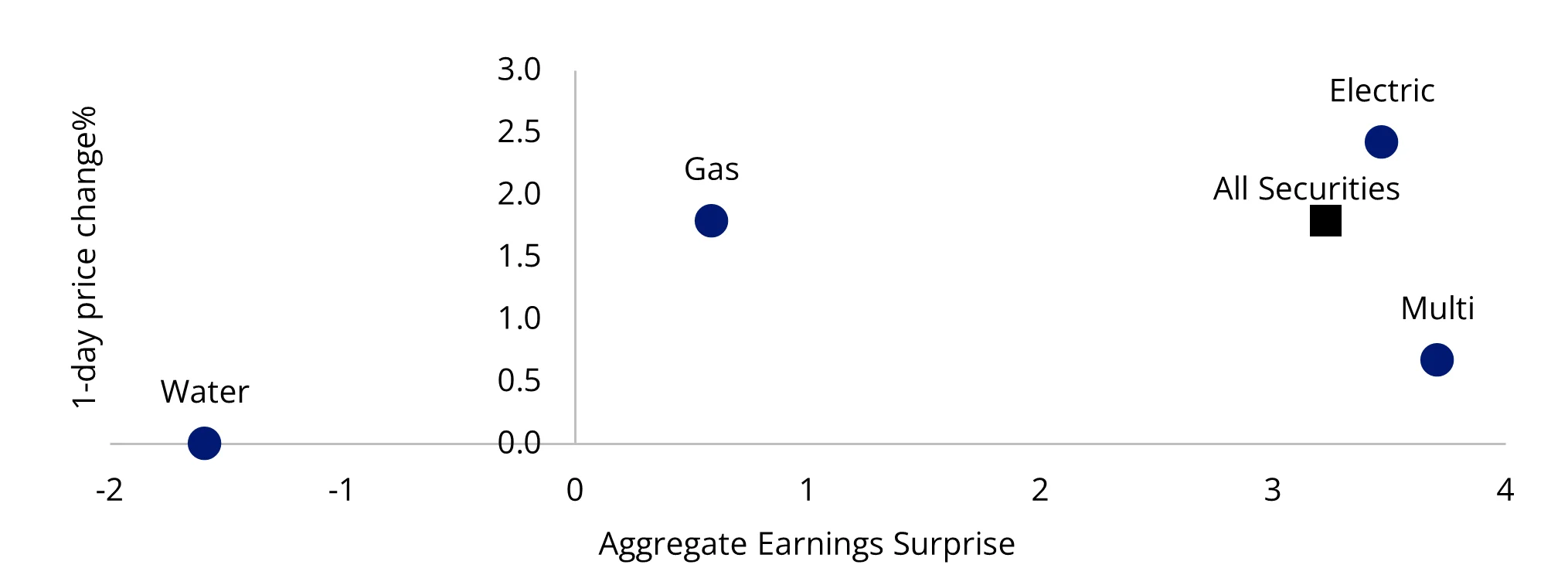
On a sub‑sector level, electric utilities are a clear standout, with an aggregated earnings surprise of 3.5% and an average 1‑day price reaction of 2.4%. Companies including Exelon (NASDAQ: EXC) and NextEra (NYSE: NEE) have delivered strong results against a backdrop of energy market tightness and have seen their shares rise 5.5% and 3.8% in USD, month‑to‑date as of 18 February 2026.
Chart 9: Utilities Q4 2025 aggregate earnings surprise vs 1-day price reaction - by sub-sector
Source: VanEck. Bloomberg. Performance in USD. Data as of 18 February 2026. Sectors are represented by S&P 500 sub sector indices. You cannot invest in an index. Past performance is not indicative of future performance.
Energy names have also delivered robust results, with Kinder Morgan (NYSE: KMI) beating consensus by ~7% and saw shares rising 7% month‑to‑date as of 18 February 2026.
Looking ahead – back to the basics
US earnings results highlight the overall strength of US corporates. However, for tech ‘darlings’, they are facing a fast‑rising bar for reward, and that ‘unloved’ real‑economy sectors have seen structural tailwinds translate into solid results and price performance.
Considering a number of moving pieces in the US, including post-May monetary policy path, geopolitical uncertainty, elevated tariffs and on-going fiscal pressure, it is likely that the macro environment in the coming months could grow increasingly supportive for real‑economy sectors such as energy and utilities.
The VanEck FTSE Global Infrastructure (AUD Hedged) ETF provides diversified exposure to a portfolio of listed global infrastructure assets. At the time of writing, approximately 60 percent of IFRA’s portfolio is allocated to the energy and utilities sectors.
Key risks: An investment in our global infrastructure ETF carries risks associated with: ASX trading time differences, financial markets generally, individual company management, industry sectors, foreign currency, currency hedging, country or sector concentration, political, regulatory and tax risks, fund operations, liquidity and tracking an index. See the VanEck FTSE Global Infrastructure (AUD Hedged) ETF PDS and TMD for more details.
IFRA is likely to be appropriate for a consumer who is seeking capital growth and regular income distribution, is intending to use the product as a minor or satellite allocation within a portfolio, has an investment timeframe of at least 5 years, and has a high to very high risk/return profile.


Published: 24 February 2026
Any views expressed are opinions of the author at the time of writing and is not a recommendation to act.
VanEck Investments Limited (ACN 146 596 116 AFSL 416755) (VanEck) is the issuer and responsible entity of all VanEck exchange traded funds (Funds) trading on the ASX. This information is general in nature and not personal advice, it does not take into account any person’s financial objectives, situation or needs. The product disclosure statement (PDS) and the target market determination (TMD) for all Funds are available at vaneck.com.au. You should consider whether or not an investment in any Fund is appropriate for you. Investments in a Fund involve risks associated with financial markets. These risks vary depending on a Fund’s investment objective. Refer to the applicable PDS and TMD for more details on risks. Investment returns and capital are not guaranteed.