The investments powering the future


The next generation of investment opportunities won't necessarily come from artificial intelligence itself, but from the industries making it possible.
The world's largest hyperscalers are expected to spend US$765 billion on AI infrastructure in 2026, with Alphabet recently increasing its own capital expenditure guidance to US$205 billion this year. Quantum computing investment increased more than sixfold to an estimated US$12.6 billion in 2025 as governments, technology companies and private capital accelerated commercial development. Artificial intelligence, cloud computing and quantum technologies are driving structural demand for increasingly advanced semiconductors, expanding one of the world's most important technology supply chains. Governments are responding by investing heavily in semiconductor manufacturing and critical mineral supply chains, reflecting the growing strategic importance of computing power and advanced materials.
AI's next chapter is being built in factories, not apps
For the past two years, much of the market's attention has focused on the companies developing artificial intelligence applications. Today, the investment opportunity is much broader.
Artificial intelligence has evolved into one of the world's largest physical infrastructure investment cycles. The world's largest hyperscalers are expected to invest US$765 billion this year building the data centres, networking infrastructure and computing capacity needed to power the next generation of AI.
Chart 1: Baseline aggregate AI CapEx estimates (US$ billions)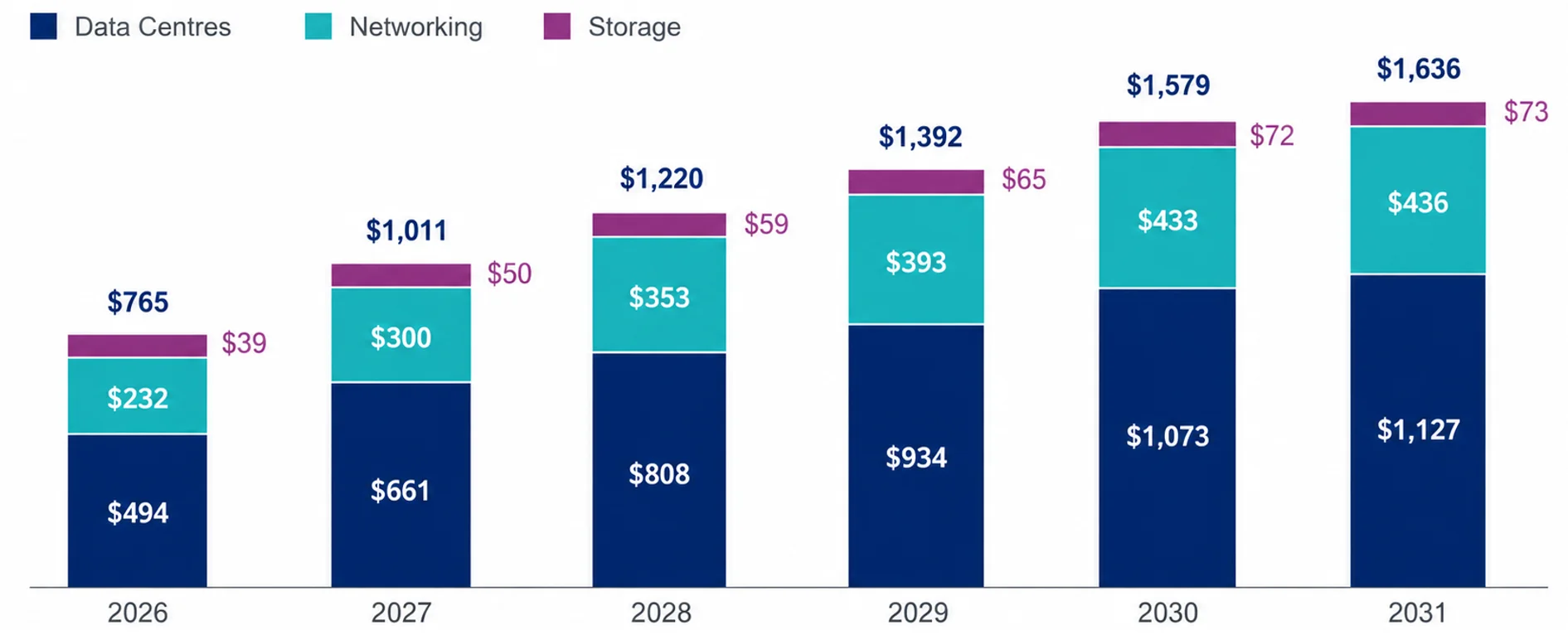
At the same time, investment in quantum computing start-ups reached US$12.6 billion in 2025, highlighting growing confidence that the next frontier in computing is moving from scientific research towards commercial reality. By 2035, McKinsey & Company’s research suggests quantum computing could deliver US$1.3-2.7 trillion in worldwide economic value by 2035.
Delivering this next generation of computing will require enormous investment in computing power, advanced semiconductors and the strategic materials underpinning modern technologies. Rather than viewing these developments in isolation, we believe they represent three interconnected parts of the same long-term investment opportunity.
Technology has become a strategic asset
Artificial intelligence has become much more than just another technological innovation. Technology is increasingly becoming a matter of national security as well as economic growth.
Governments around the world are investing billions to expand domestic semiconductor manufacturing, secure critical mineral supply chains and accelerate quantum research. Initiatives such as the US CHIPS Act, new critical minerals partnerships and the $22.7 billion Future Made in Australia program all point to the same conclusion: computing power, semiconductor capacity and access to strategic materials are no longer simply commercial advantages. They have become strategic national priorities.
For investors, this represents a structural shift. Technology leadership is increasingly being determined by both software innovation and access to computing power, semiconductor manufacturing capacity and resilient supply chains for the materials underpinning advanced technologies.
The investment opportunity is therefore broadening beyond today's AI beneficiaries to include the industries enabling tomorrow's technological economy.
Three structural growth opportunities
Our three new funds represent three different ways to access this opportunity. Together, the VanEck Quantum ETF (QNTM), VanEck Semiconductor ETF (SMHG) and VanEck Rare Earth and Strategic Metals ex China ETF (RESM) provide targeted exposure to three complementary industries that are becoming critical to the economy of tomorrow.
VanEck Quantum ETF (ASX: QNTM)
Quantum computing has the potential to fundamentally change what computers are capable of solving.
Unlike conventional computers, quantum systems use the principles of quantum mechanics to tackle optimisation, scientific and cybersecurity problems beyond the capability of today's most powerful machines. While quantum computing remains an emerging technology, the pace of commercialisation is accelerating. Capital investment, industry adoption and revenues are all beginning to scale at the same time, suggesting the sector is moving beyond pure research towards real-world applications.
Chart 2: Quantum’s present and future, in four numbers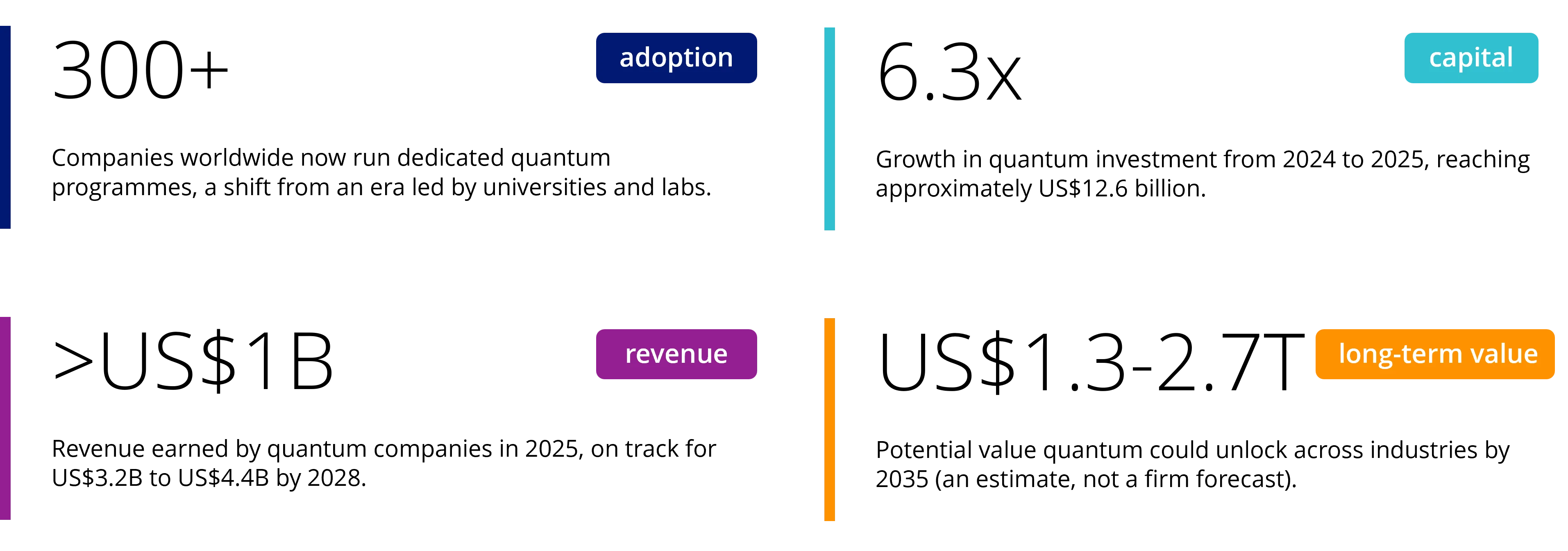
The VanEck Quantum ETF (QNTM) provides investors with targeted exposure to companies across the global quantum computing ecosystem, including quantum hardware developers, enabling technologies and specialised software companies. It will become Australia's first dedicated quantum computing ETF.
VanEck Global Semiconductor ETF (ASX: SMHG)
Every advance in artificial intelligence ultimately requires more computing power.
Semiconductors sit at the centre of this investment cycle, enabling everything from AI model training and cloud computing to robotics, autonomous systems and quantum computing itself. As demand for increasingly sophisticated chips continues to accelerate, semiconductor companies remain among the most important enablers of tomorrow's digital economy. What’s more, while artificial intelligence may be the biggest growth driver for semiconductors today, it is far from the only one. Demand continues to broaden across data centres, automotive, industrial automation, communications infrastructure and consumer electronics, reinforcing semiconductors' role as the foundational technology behind the digital economy.
Chart 3: Semiconductor end market demand continues to grow
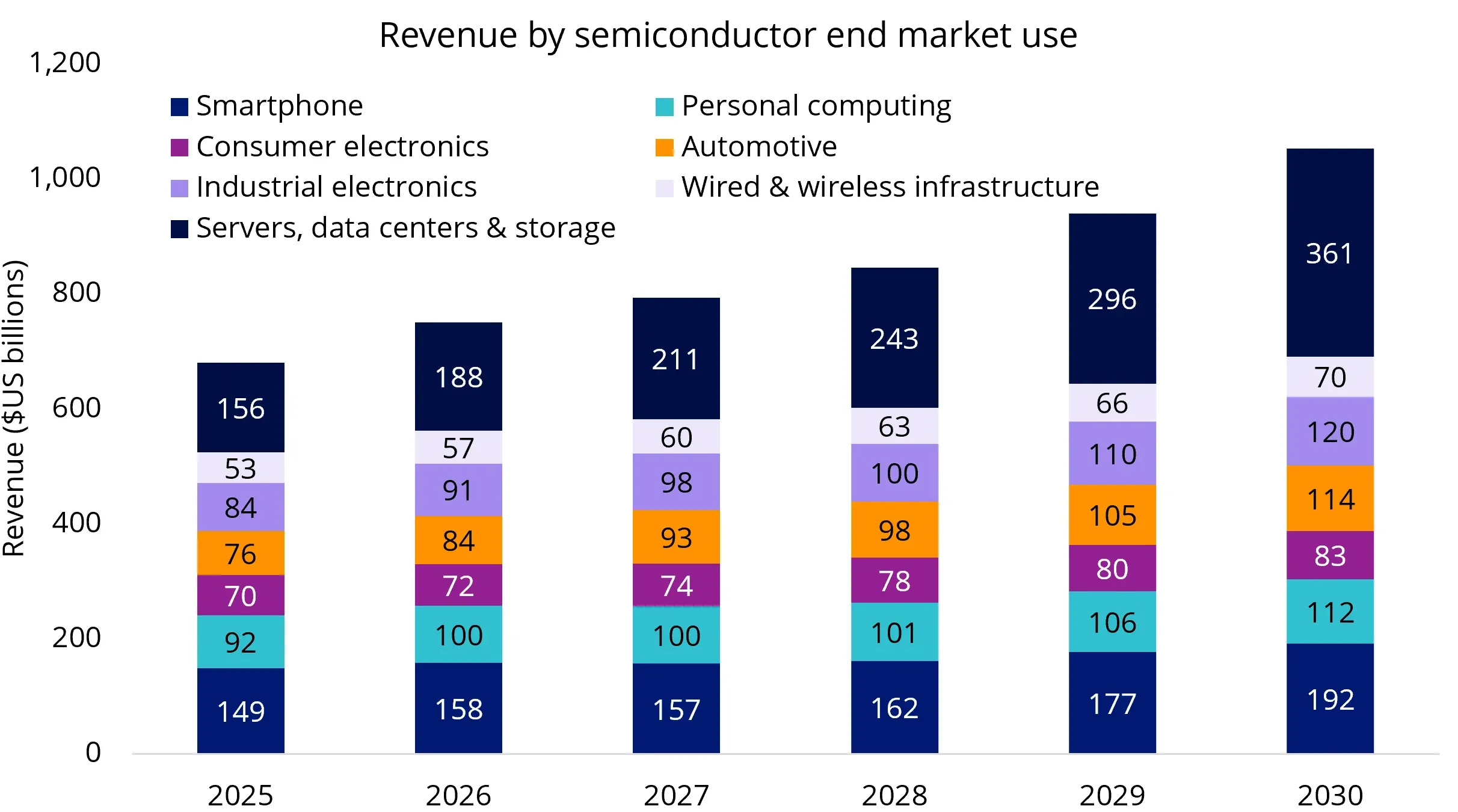
Source: ASML Investor Day 2024, "End Markets, Wafer Demand and Lithography Spending" (A. Harchandani), slide 13, 14 November 2024 (labelled "CMD 2024" scenario).
The VanEck Global Semiconductor ETF (SMHG) provides exposure to leading global semiconductor designers, manufacturers and equipment companies across the industry's entire value chain. It also builds on VanEck's global expertise managing the world's largest semiconductor ETF (NYSE: SMH), while offering Australian investors the market's lowest-cost global semiconductor ETF.
VanEck Rare Earth and Strategic Metals ex China ETF (ASX: RESM)
Modern technologies depend on more than computing power.
Rare earths and strategic metals are essential inputs for semiconductors, robotics, defence systems, electric vehicles, wind turbines and the permanent magnets that underpin many advanced technologies. At the same time, governments are seeking to diversify critical mineral supply chains, reflecting the growing strategic importance of these materials. Rare earths and strategic metals have become increasingly important for advanced technologies and for economic resilience and national security. As governments seek to diversify supply chains, investment is accelerating in mining and refining capacity outside China, creating new opportunities across the global critical minerals ecosystem.
Chart 4: The next wave of supply is being built outside China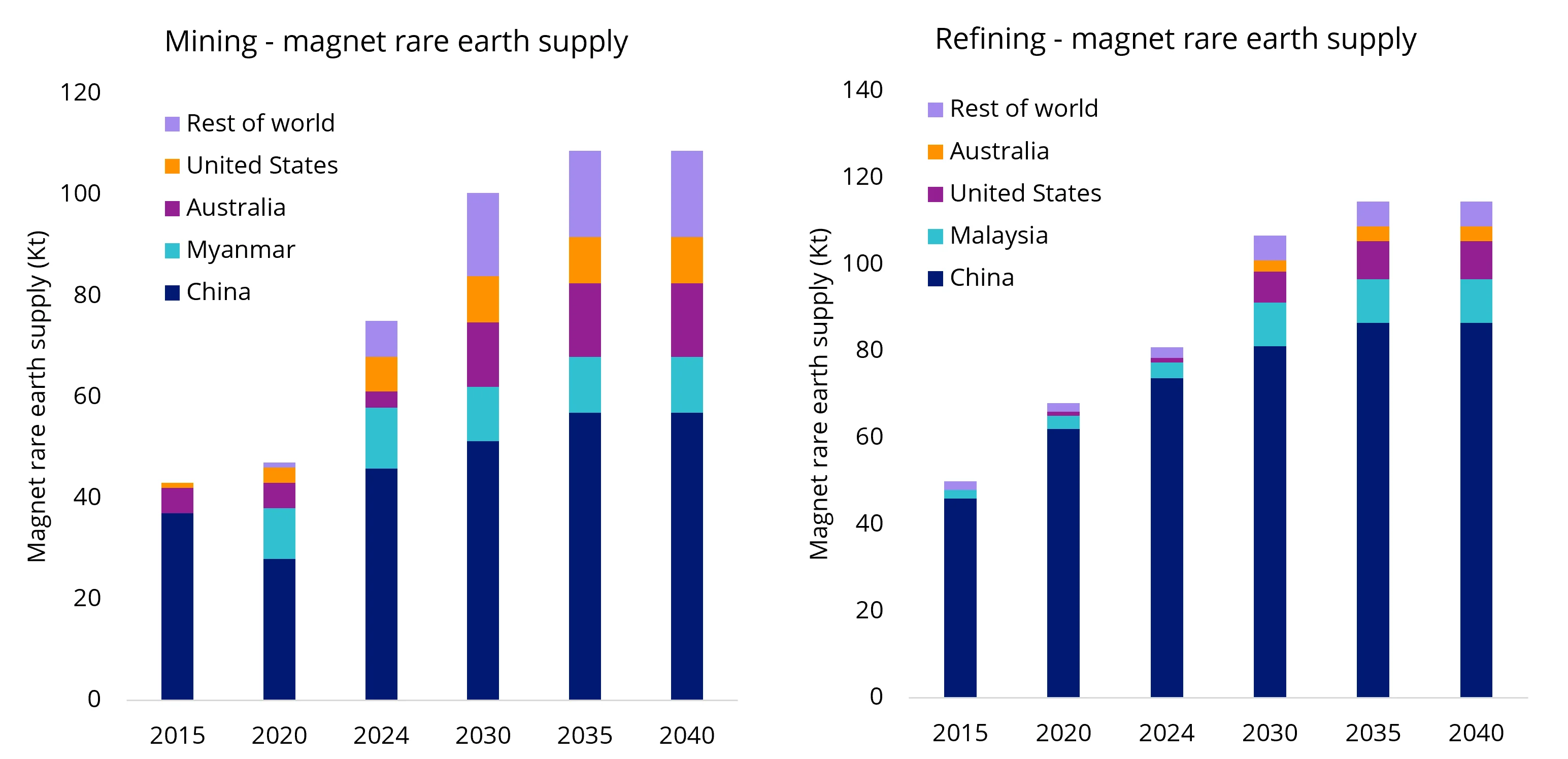
The VanEck Rare Earth and Strategic Metals ex China ETF (RESM) provides targeted exposure to companies producing rare earths and strategic metals outside China, allowing investors to access an important part of the global technology supply chain while reducing exposure to Chinese producers.
Why VanEck?
VanEck has a long history of identifying structural investment opportunities and providing investors with targeted access to emerging industries. Globally, VanEck manages the world's largest semiconductor ETF (NYSE: SMH), one of the world's longest-running dedicated rare earth ETFs (NYSE: REMX) and a quantum computing ETF in Europe.
The launch of QNTM, SMHG and RESM builds on that experience while giving Australian investors access to three industries we believe will play an important role in tomorrow's economy.
Key risks:
An investment in our Megatrends ETFs carries risks associated with: the Quantum computing industry (QNTM), ASX trading time differences, financial markets generally, individual company management, industry sectors, foreign currency, country or sector concentration, political, regulatory and tax risks, fund operations and tracking an index. See the PDS and TMD for more details once available on vaneck.com.au.
Related Insights


Published: 07 August 2026
IMPORTANT NOTICE
VanEck Investments Limited (ACN 146 596 116 AFSL 416755) (VanEck) is the issuer and responsible entity of all VanEck exchange traded funds (Funds) trading on the ASX. This is general advice only and does not take into account any person’s financial objectives, situation or needs. The product disclosure statement (PDS) and the target market determination (TMD) for all Funds are available at vaneck.com.au. You should consider whether or not any Fund is appropriate for you. Investments in a Fund involve risks associated with financial markets. These risks vary depending on a Fund’s investment objective. Refer to the applicable PDS and TMD for more details on risks. Investment returns and capital are not guaranteed.