Forgotten since the GFC and now value is back


Four reasons we think value investing could be back in vogue.
Value investing was the go-to approach from the 1970s to the GFC. This was an era when interest rates and inflation were elevated, which saw investors gravitate towards those companies trading at lower valuation multiples and strong tangible cash flows, contributing to outperformance relative to growth companies.
After the GFC, growth and quality companies were in favour during the low growth and low inflation environment.
Chart 1: Value/Growth vs US CPI YoY%
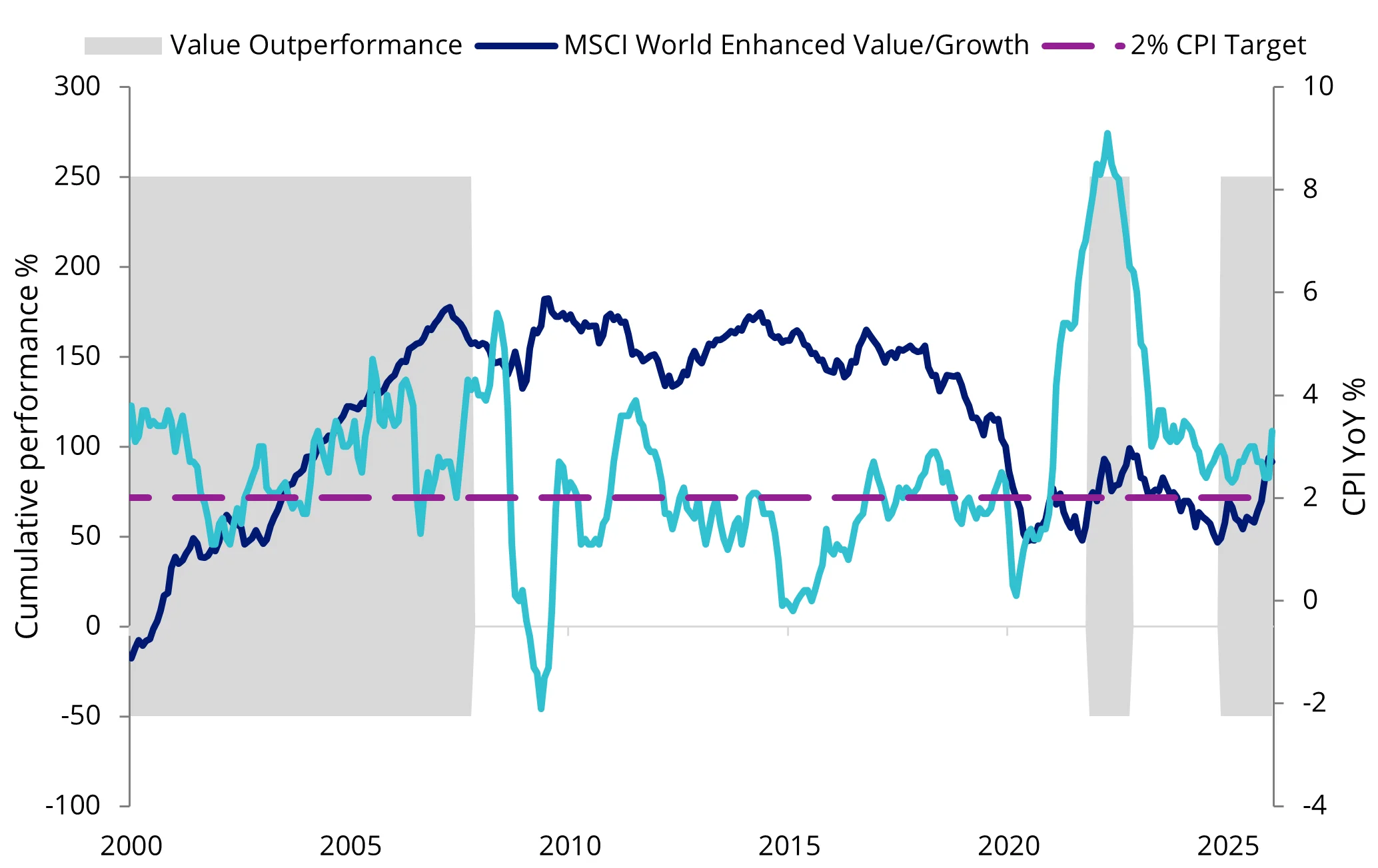
Source: Bloomberg, 20 April 2026. Growth is MSCI Growth Index. Value is MSCI Value Index. Performance in AUD, US CPI YoY% data as of 31 March 2026 due to data availability. Past performance is not indicative of future performance. You cannot invest in an index.
Chart 2: Cumulative performance by factor
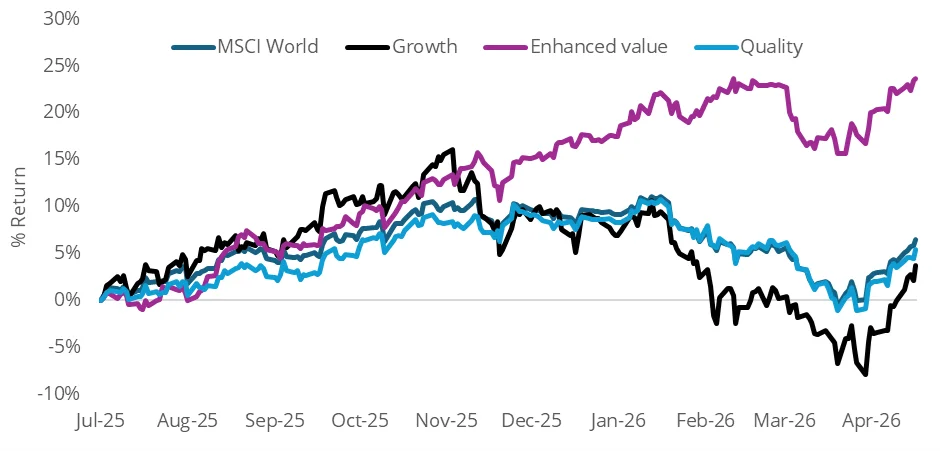
Source: Bloomberg, 20 April 2026. Returns in AUD. Growth is MSCI World Growth Index, Enhanced Value is MSCI World ex Australia Enhanced Value Top 250 Select Index, Quality is MSCI World Ex Australia Quality Index, and Benchmark is MSCI World Index. Past performance is not indicative of future performance. You cannot invest in an index
Inflation has returned, and it remains sticky; value has returned, and it has outperformed over the past 12 months. There are several signs, we think, that suggest we could be in the early stages of a value market.
1. Inflation pressure could stay elevated
The ongoing oil crisis, alongside other factors such as historically high global government debt, could sustain inflationary pressure in the US, with potential global spillovers. While markets have priced in a quick resolution to the US-Iran conflict, oil prices remain up more than 56% from six months ago. The chart below shows that, historically, elevated oil and commodity prices have been a leading indicator of higher inflation. Latest data shows that 2-year US inflation expectations have reached almost 3%, above the US Federal Reserve's 2% target, and markets forecast rates on hold until year end.
Chart 3: High oil and commodity prices could see higher inflation
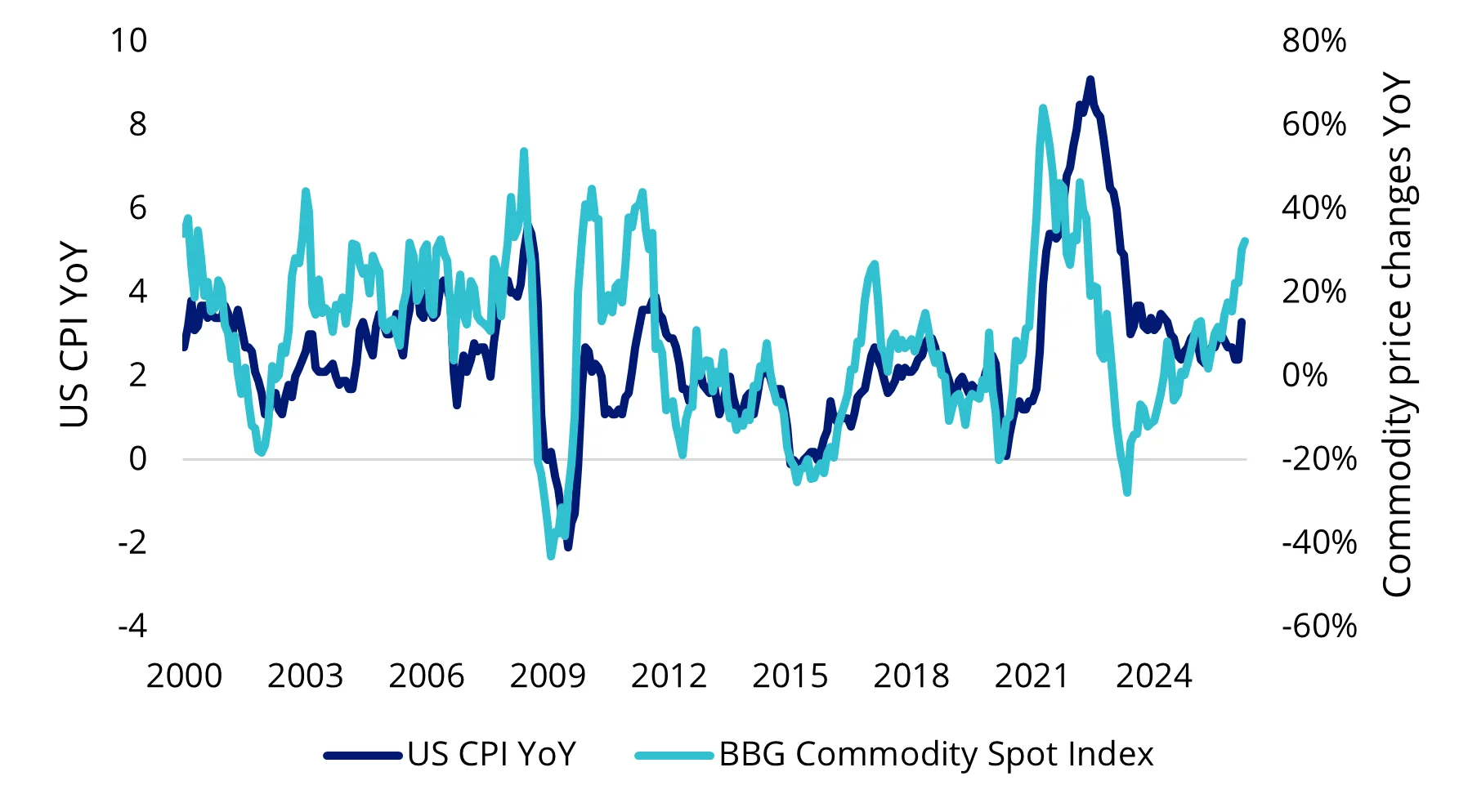
Source: Bloomberg, Bureau of Labor Statistics. As at 31 March 2026. Past performance is not indicative of future performance.
2. US economic growth outlook still resilient
Despite a number of growing pains including mounting fiscal debt, tariff disruption, a shrinking labour force following immigration policy pivot and an ongoing war with Iran, the US economy still looks resilient with a stable growth outlook at ~2% real growth and a probability of recession of only 30%.
Chart 4 & 5: US Real GDP outlook and probability of recession
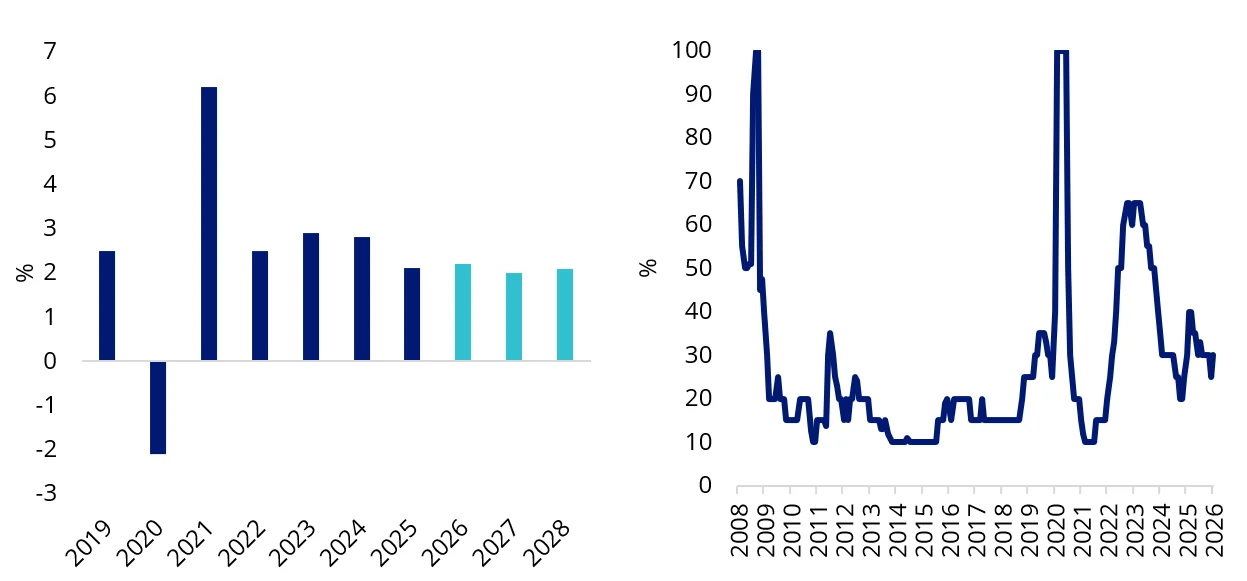
Source: Bloomberg. Chart 4: GDP data as of 31 December 2025 due to data availability. Forecast of GDP growth is based on sell side consensus. Chart 5: Data as of 20 April 2026.
In combination, somewhat resilient growth with growing long-term risk and persistent inflation pressure paints a stagflationary picture over the coming months – a potentially favourable environment for value companies. The factor outperformed in four of last five stagflation periods shown below, with the last two ‘soft’ landings, economic growth positive but low.
Chart 6: Performance during stagflation periods
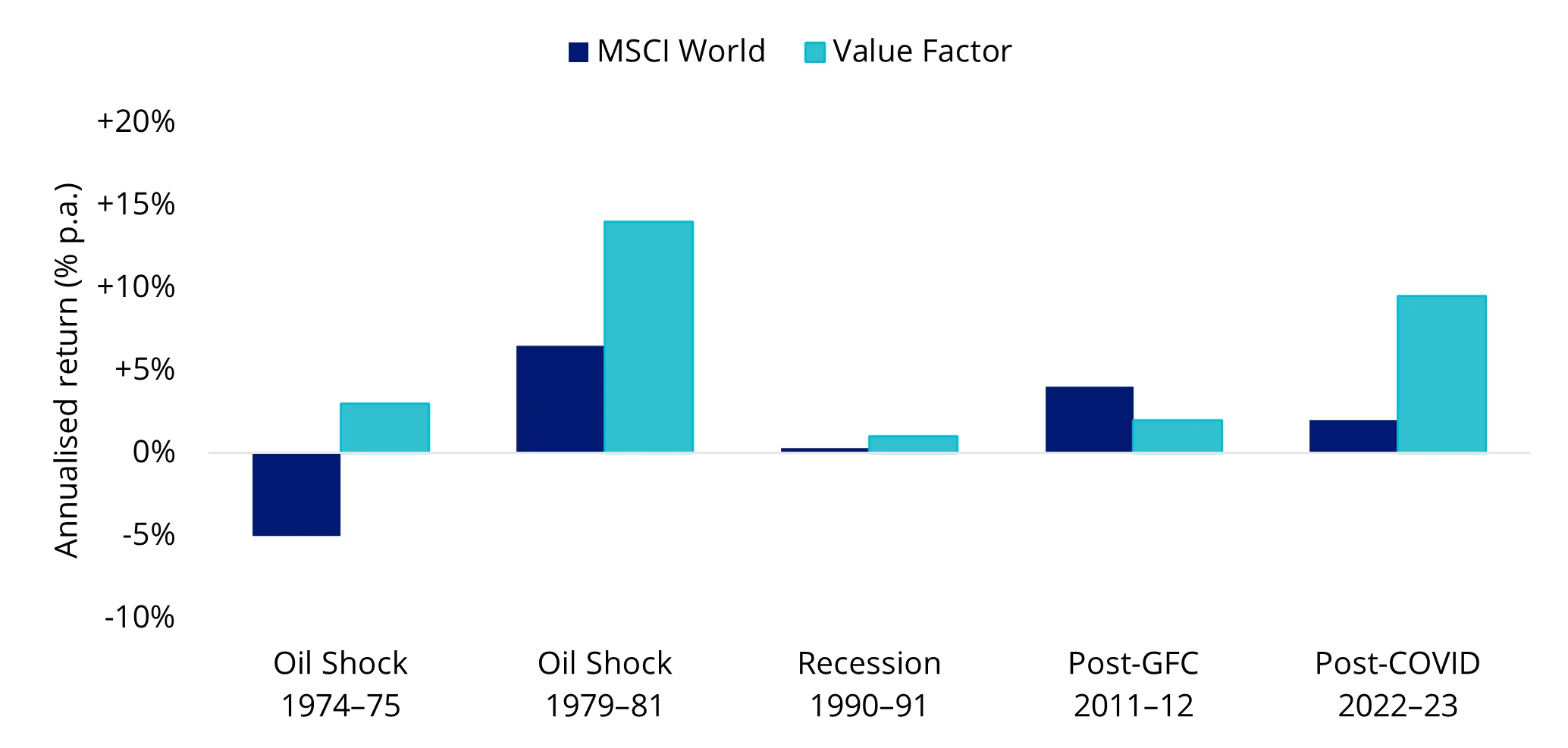
Source: Bloomberg; Value is MSCI World Value Factor (pre-2000) and MSCI World Enhanced Value Factor (post-2000); You cannot invest in an index. Returns in US dollars. Past performance is not indicative of future performance.
3. Global corporate earnings outlook remains optimistic
Developed markets manufacturing activity has risen back to expansionary territory since late 2025, setting the stage for renewed optimism surrounding the corporate outlook. Supported by global AI infrastructure buildout and a generational step-up in defence investment, the US, Japanese and European markets have all experienced an acceleration of forward earnings growth expectations over the past twelve months.
Notably, Europe and Japan have historically been deemed value-oriented markets, as they are dominated by mature behemoths with low-to-no earnings growth, unlike the US market. Looking ahead, supported by sustained AI hardware demand and defence upgrades, these markets could see a return to high-single-digit earnings growth, which may disproportionately trigger strong price appreciation, supporting the value factor, which is overweight in these markets.
Charts 7 & 8: EPS growth YoY% and US private investment & Developed markets manufacturing activity
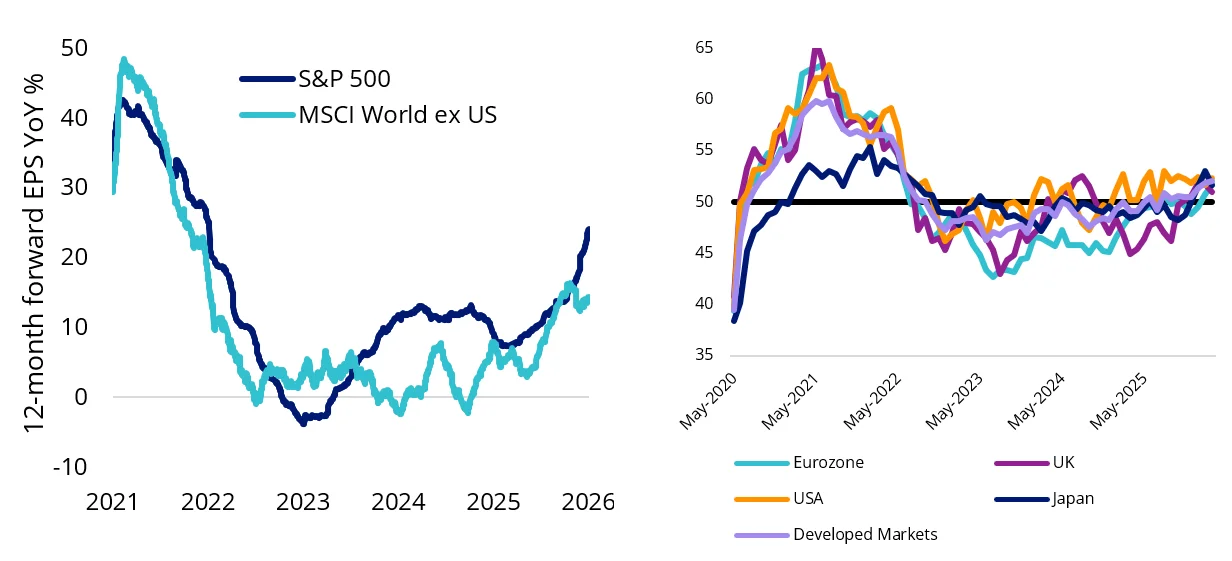
Source: Bloomberg. Chart 7: Data as of 20 April 2026. Chart 8: Data as of 31 March 2026.
4. Value companies offering compelling valuations
Despite strong performance for value, it is trading at levels close to its 10-year average. From a relative value perspective, valuations also hit a multi-year low relative to broader equities (proxied by MSCI World ex Australia Index), indicating ample headroom on the upside.
Charts 9 & 10: factor valuations and valuations differential – value vs broad market
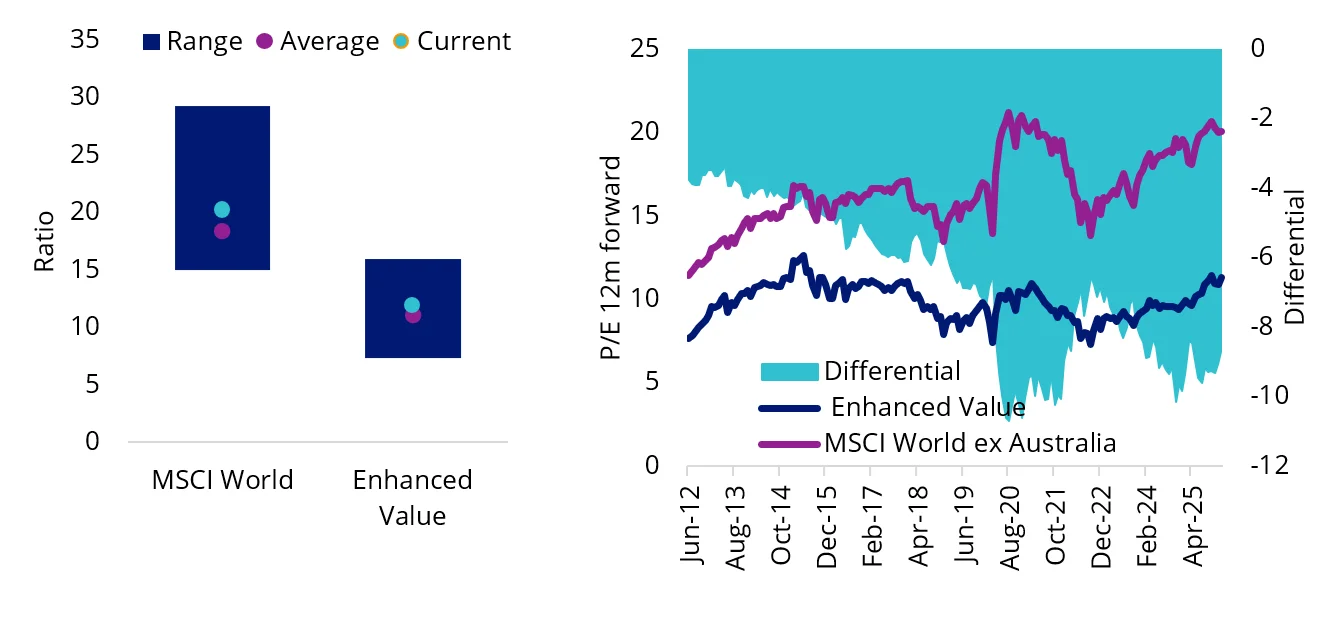
Source: Bloomberg. Chart 9: As of 17 April 2026. Quality is MSCI World ex Australia quality Index. Enhanced value is MSCI World ex Australia Enhanced Value Top 250 Select Index. Growth is MSCI World ex Australia Growth Select Index. Chart 10: Data as at 31 March 2026 due to data availability.
Accessing the enhanced value factor
A way to access the value factor, and with enhanced metrics, is via the VanEck MSCI International Value ETF (VLUE) or the VanEck MSCI International Value (AUD Hedged) ETF (HVLU) . It gives investors access to a portfolio of international companies that are selected for their high value score relative to sector peers as measured by MSCI based on: (i) price to book value; (ii) price to forward earnings; and (iii) enterprise value to cash flow from operations.
Click here to see performance.
Key risks
An investment in our international value ETF carries risks associated with: ASX trading time differences, financial markets generally, individual company management, industry sectors, foreign currency, country or sector concentration, political, regulatory and tax risks, fund operations, liquidity and tracking an index. See the VanEck MSCI International Value ETF PDS and TMD for more details.
VLUE is likely to be appropriate for a consumer who is seeking capital growth, is intending to use the product as a major, core, minor or satellite allocation within a portfolio, has an investment timeframe of at least 5 years, and has a high risk/return profile.


Published: 01 May 2026
Any views expressed are opinions of the author at the time of writing and is not a recommendation to act.
VanEck Investments Limited (ACN 146 596 116 AFSL 416755) (VanEck) is the issuer and responsible entity of all VanEck exchange traded funds (Funds) trading on the ASX. This information is general in nature and not personal advice, it does not take into account any person’s financial objectives, situation or needs. You should consider whether or not an investment in any Fund is appropriate for you. Investments in a Fund involve risks associated with financial markets. These risks vary depending on a Fund’s investment objective. Refer to the applicable product disclosure statement (PDS) and target market determination (TMD) available at vaneck.com.au for more details. Investment returns and capital are not guaranteed.