International value stocks regain momentum


Markets bounced back in April, mostly wiping away March’s losses. But some strategies bounced back higher than other.
The value factor has come to the fore, as investors focus on tangible cash flows, robust balance sheets, and reasonable valuations.
Recent key drivers include an acceleration in forward earnings growth of value companies, outpacing the benchmark, with higher forward earnings growth. This dynamic is rare but highlights a broader story of AI-driven earnings re-rating in mature companies.
An analysis of the recent US earnings season has also confirmed that value fundamentals are improving. Over the past three quarterly result periods, value companies have reported more net beats than the benchmark.
Now that inflation is spiking and growth is stagnating, stagflation is fast becoming a base-case, as a result ‘value’ investing is again high in investors’ consideration. Should the long end of the yield curve remain high, we think the value factor could continue its relative outperformance.
Taking the right value approach is what makes VLUE work as a core holding. Value investing focuses on buying companies the market may be undervaluing. While this seems an intuitively straightforward path to investment success and history supports that argument, taking the right value approach is important. VLUE’s sector neutrality, exclusion of small caps, and Enhanced Value methodology are what allow it to function as a core position rather than a tactical tilt.
We have written about how the value factor may be used alongside quality and growth factors here.
Why the value factor could continue to do well
The threat of stagflation won’t go away
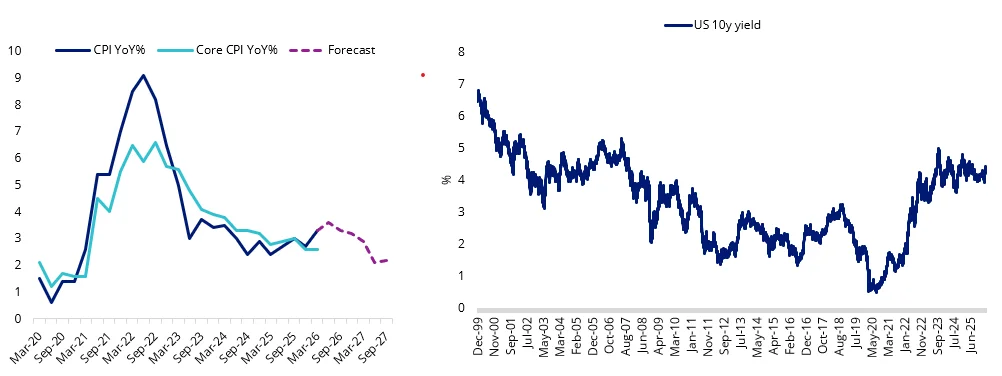
The threat of a stagflationary environment, higher inflation alongside stalling economic growth, has emerged. The longer the US-Iran crisis goes on, the higher the chances a stagflationary environment eventuates. Higher oil prices add further pressure to already elevated inflationary pressures around the developed world. US inflation is forecast to reach 4% this year, above the Fed target of 2%. Markets have responded with the 10-year US Government Bond Yields trading at yields above 4%, reflecting a higher for longer rates environment.
Chart 1 & 2: US inflation and outlook & US 10 year government bond yields
Source: Bloomberg, to 30 April 2026.
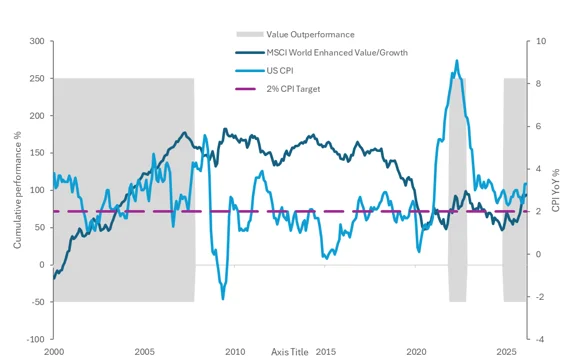
Elevated inflation and rates could result in the value factor continuing to outperform, as in the past, during these types of environments, investors typically seek cheap, shorter-duration and high cash flow companies. This is evident in the chart below between the years of the dot-com bust and the global financial crisis, and then in 2022 when CPI spiked.
Chart 3: Performance of Value since 2000
Source: Bloomberg, MSCI, US Bureau of Labor Statistics, 1 January 2000 to 31 March 2026. Value as MSCI World ex Australia Enhanced Value Top 250 Select Index. Past performance is not indicative of future performance. You cannot invest in an index.
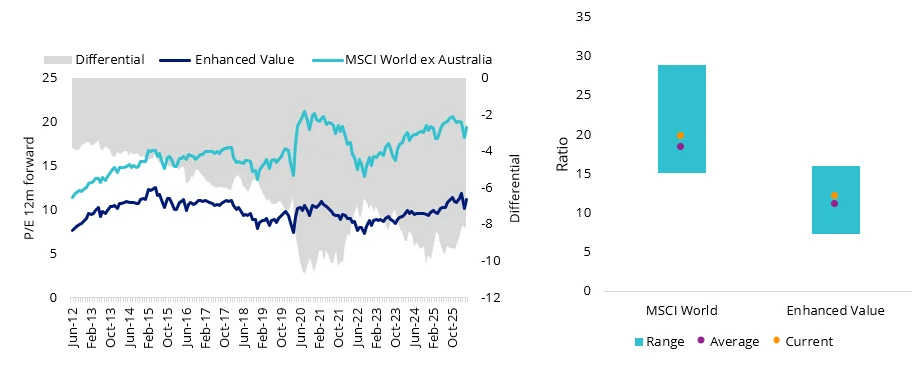
Another reason we think that the value factor could continue to do relatively well is that, despite its recent strong performance, Value is trading at levels close to its 10-year average. From a relative value perspective, valuations also hit a multi-year low relative to broader equities (proxied by the MSCI World ex Australia Index). We think this highlights that there could be ample headroom on the upside.
Chart 4 & 5: Price to 12 month forward earnings for Enhanced Value and MSCI World ex Australia Index
Source: MSCI, Bloomberg, 30 April 2026. Enhanced Value is the MSCI World ex Australia Enhanced Value Index. MSCI World is the MSCI World ex Australia Index.
Recent drivers of performance
Recent key drivers include an acceleration in forward earnings growth of value companies, outpacing the benchmark. Additionally, investors are seeking cheaper companies with short duration and high cash flow to mitigate against the impact of rising and elevated inflation.
Chart 6: Short term forward growth composition
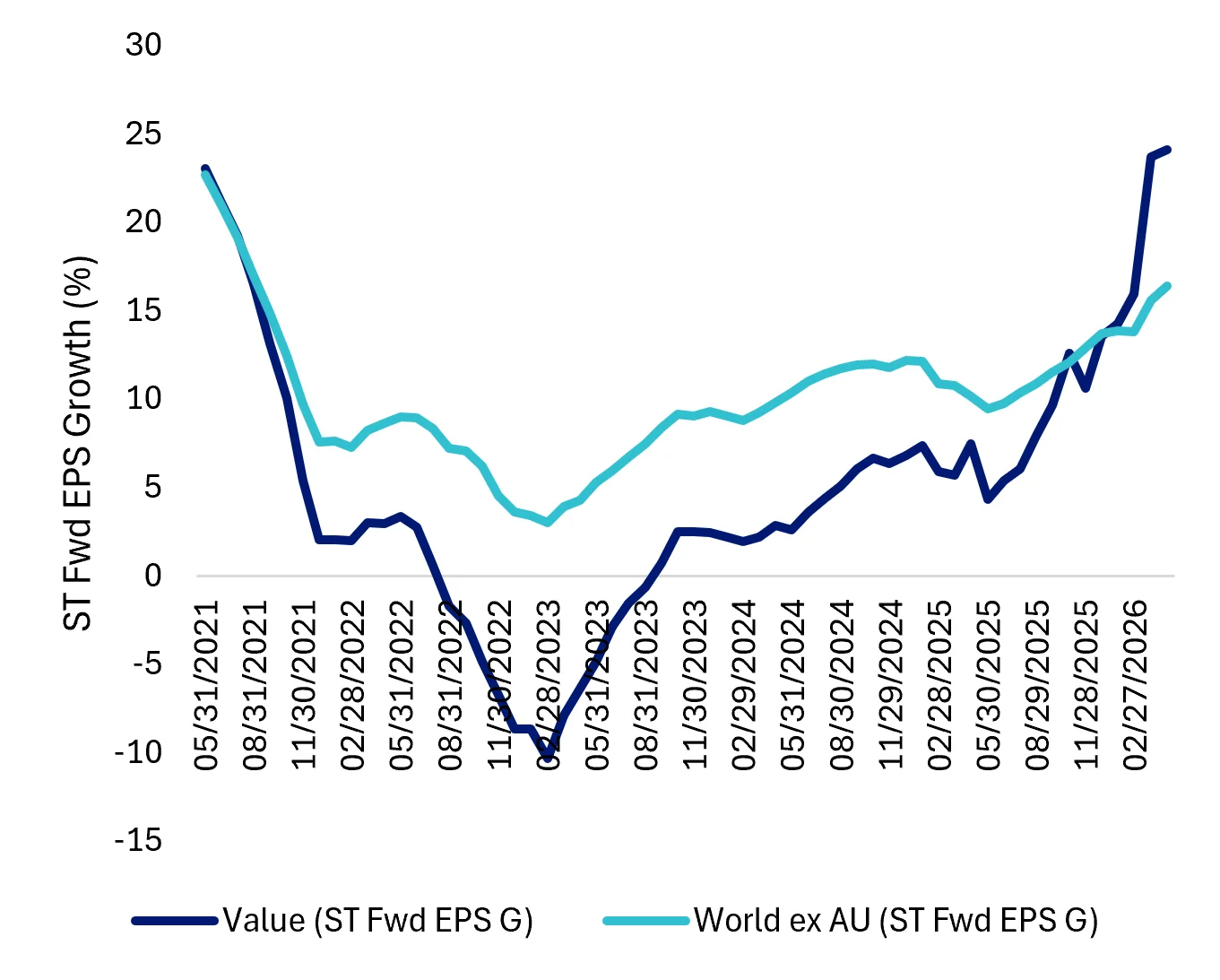
Source: MSCI, 30 April 2026. Value is MSCI World ex Australia Enhanced Value Index.
An analysis of the recent US earnings season has also confirmed that value fundamentals are improving. Over the past three quarterly result periods, Value companies have reported more net beats than the benchmark. As of 5 May 2026, Q2 has been the strongest out of the past five quarters, with sell-side analysts forecasting for enhanced value companies to have higher year-on-year EPS growth than the broad international equity market, as represented by the MSCI World ex Australia Index, over the next two years.
Chart 7 & 8: EPS Beat rate % (Enhanced Value and MSCI World), Expected EPS Growth (Enhanced Value and MSCI World)
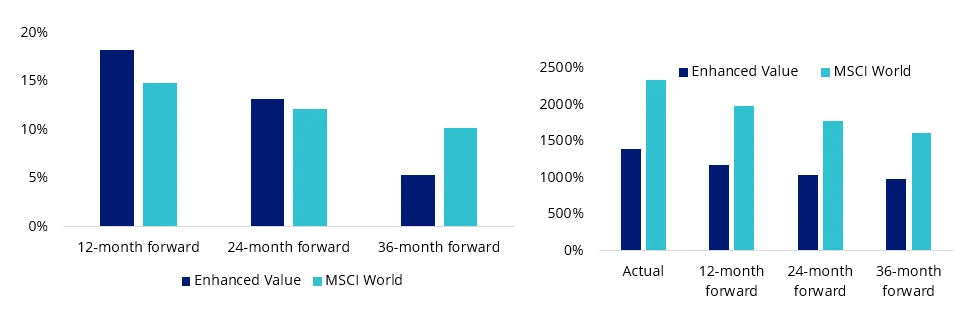
Source: VanEck. Bloomberg. Reporting seasons: Q1 25 (14 Apr – 31 May 2025), Q2 25 (14 Jul – 31 Aug 2025), Q3 25 (13 Oct – 30 Nov 2025), Q4 25 (12 Jan – 28 Feb 2026), Q1 26 (13 Apr – 31 May 2026). Enhanced Value is MSCI World ex Australia Enhanced Value Index. MSCI World is MSCI World ex Australia Index.
A few company highlights show why.
Micron: AI tailwinds resulting in explosive EPS growth. Up 108.3% YTD in AUD. Largest VLUE holding.
Micron Technology is a global leader in memory chips, a critical component of data centres, AI servers, smartphones, PCs and industrial devices. EPS has surged from a loss of $5.34 in fiscal 2023 to $7.65 in fiscal 2025, reaching $12.25 in fiscal Q2 2026, driven by AI-fuelled memory demand, pricing gains and margin expansion.
Earnings-season sentiment shows no slowdown in memory chip demand. UBS forecasts High Bandwidth Memory (HBM) end-consumption rising ~80% year-on-year in 2026, and shortages across HBM, DRAM and NAND continue to support pricing, revenue growth and margin expansion.
Despite a 900%+ rally since April 2023, Micron still trades on a 12-month forward P/E of 9x, versus 24.46x for the S&P 500 Information Technology Index (2.7x higher), as EPS has grown into the rally.
Chart 9: Micron EPS growth year-on-year (%)
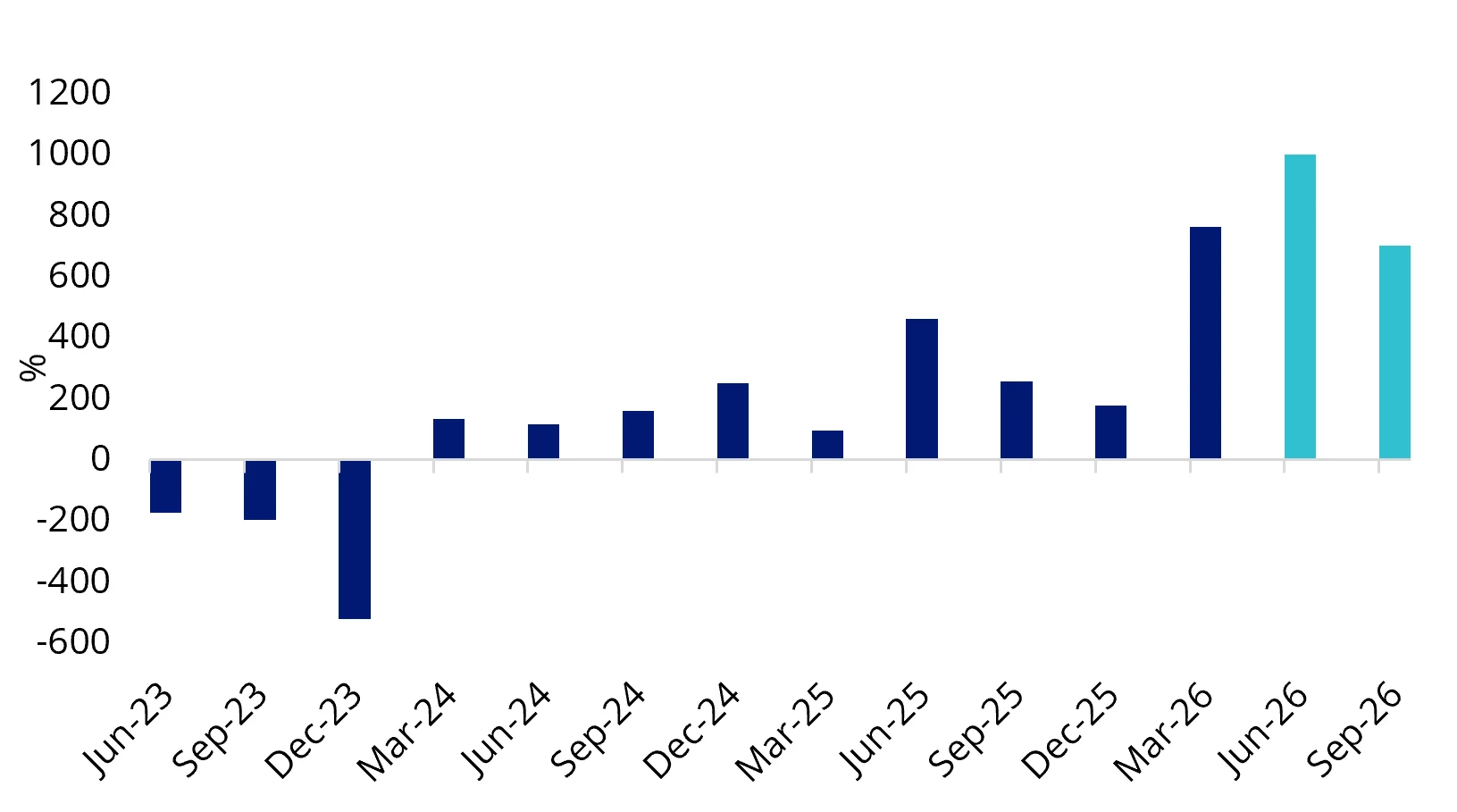
Source: Bloomberg. Data accessed 5 April 2026. Past performance is not indicative of future performance. Not a recommendation to act.
Mitsui & Co.: An industrial with earnings recovery, buybacks and rising dividends. Up 16.6% YTD in AUD.
Mitsui & Co. is one of Japan's major general trading houses, operating across mineral and metal resources, energy, machinery and infrastructure, chemicals, and iron and steel products.
The energy segment continues to be the primary growth driver, offsetting declines in mineral and metal revenue, with LNG-related business showing strength and new investments expected to contribute in the coming years.
Looking ahead, Mitsui's earnings are expected to be boosted by higher crude oil and natural gas prices, with a $1/bbl rise in crude oil resulting in an impact of ¥2.4 billion on annual net profit. The stock is trading at a 12-month forward P/E of 20.00x, below the Nikkei 225 at 23.4x.
Chart 10: Mitsui EPS growth year-on-year (%)
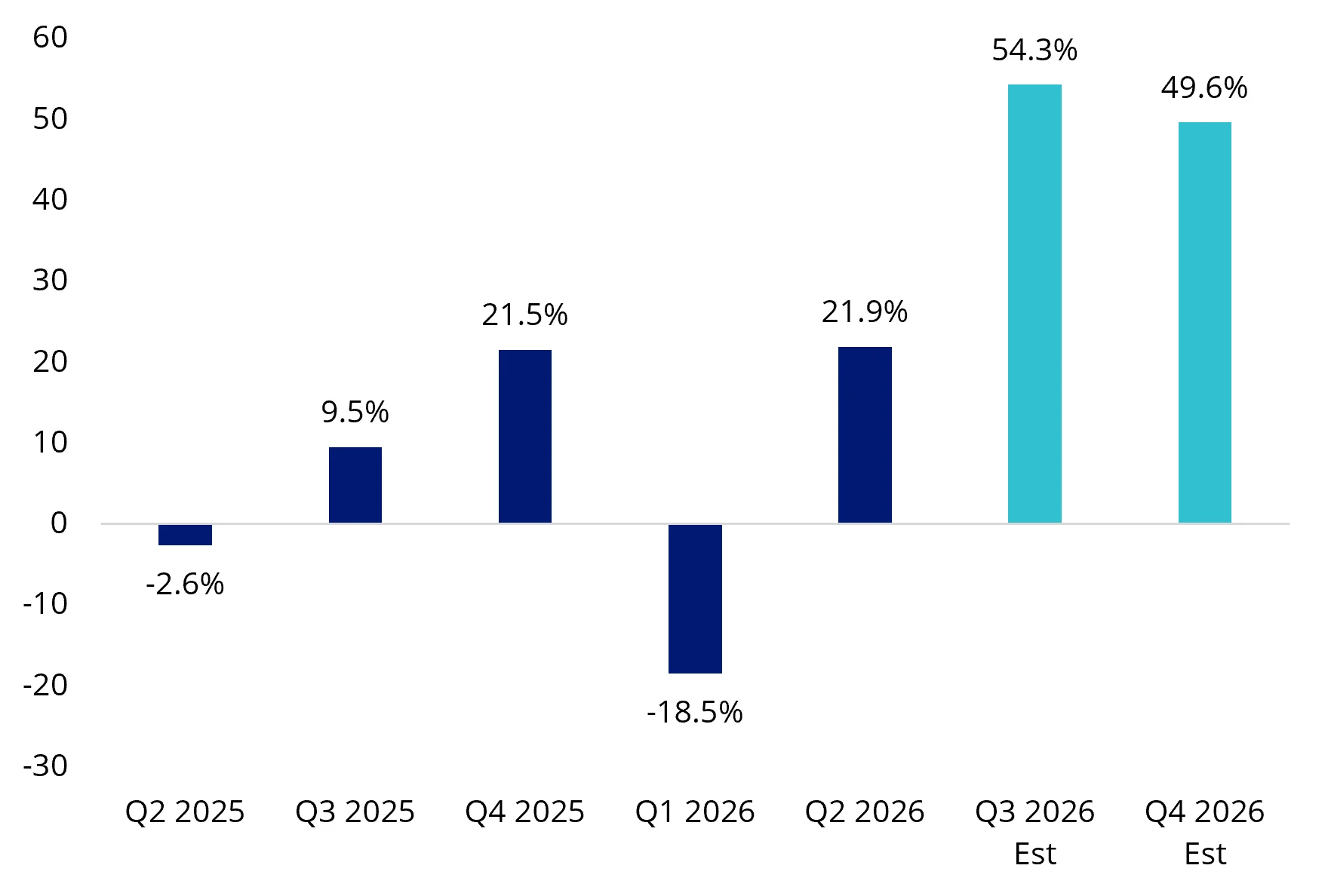
Bloomberg. Data accessed 5 April 2026. Past performance is not indicative of future performance. Not a recommendation to act.
Gaining exposure to value
VanEck’s International Value ETF (VLUE) returned 8.17% in April, it outperformed the MSCI World ex Australia Index by 3.73%. Over twelve months to 30 April, VLUE has returned 34.91%, while the MSCI World ex Australia Index returned 15.06%, noting as always that past performance is not indicative of future performance.
VLUE tracks the MSCI World ex Australia Enhanced Value Top 250 Select Index (VLUE Index), which we think is the most representative expression of the value factor available on ASX. It does not include small caps, which have diluted the returns of some other value exposures, and with only 250 high-conviction holdings, it avoids the watered-down approach of broader value indices that hold hundreds of stocks with varying degrees of value characteristics. Because it is rules-based, it does not drift from its style.
HVLU is an Australian-dollar hedged version of VLUE, so you can manage your desired currency exposure.
The Value Factor, from the factor specialists
We launched VLUE as an expansion of our factor suite of ETFs, which at the time included our MSCI International Quality ETF (QUAL). Factor-based investing involves identifying the dynamics of an investment that drive its return. In recent years, it has become associated with the ‘quant’ factors that active fund managers have used for decades to sort the wheat from the chaff.
Factor-based ETFs, a subset of smart beta, combine the best aspects of active and passive management by tracking indices with defined rules designed to deliver a targeted investment outcome, while retaining transparency, liquidity, and ease of trading for investors. And in Australia, VanEck is the leader in smart beta.
VLUE is one such ETF, and since its inception on ASX in March 2021 it has outperformed, noting as always that past performance is not indicative of future performance.
Table 1: VLUE performance as at 30 April 2026
|
|
1 month (%) |
3 months (%) |
YTD (%) |
1 year (%) |
3 years (% p.a.) |
5 years (% p.a.) |
Since VLUE inception date (% p.a.) |
|
VLUE |
8.17 |
6.80 |
8.85 |
34.91 |
20.04 |
15.08 |
15.25 |
|
MSCI World ex Australia Index |
4.44 |
0.71 |
-2.05 |
15.06 |
16.51 |
12.98 |
14.20 |
|
Difference |
+3.73 |
+6.09 |
+10.90 |
+19.85 |
+3.53 |
+2.10 |
+1.05 |
Source: VanEck, Morningstar, Bloomberg. Results assume immediate reinvestment of all dividends and include management fees but exclude brokerage costs and taxes. Past performance is not indicative of future performance.
VLUE inception date is 8 March 2021, and a copy of the factsheet is here.
The MSCI World ex Australia Index (“MSCI World ex Aus”) is shown for comparison purposes as it is the widely recognised benchmark used to measure the performance of developed market large- and mid-cap companies, weighted by market capitalisation. VLUE’s index measures the performance of 250 international large- and mid-cap companies selected from the MSCI World ex Australia Index with high value scores relative to their peers at rebalance. Exclusions apply for weapons and tobacco. Consequently, VLUE’s index has fewer companies and different country and industry allocations than MSCI World ex Aus. Click here for more details.
We have written in the past about investing through the cycle. Timing of factors is almost impossible, but we think, the performance of factors tend to track the economic cycle – read more here.
The impressive start to 2026 put VLUE in the top five per cent of its global equity peers for year-to-date performance. VLUE, relative to its peers, finished April in the top five per cent of managers over one and five years. VLUE is in the top quartile over three and years and since inception.
Chart 11: Performance relative to peer group
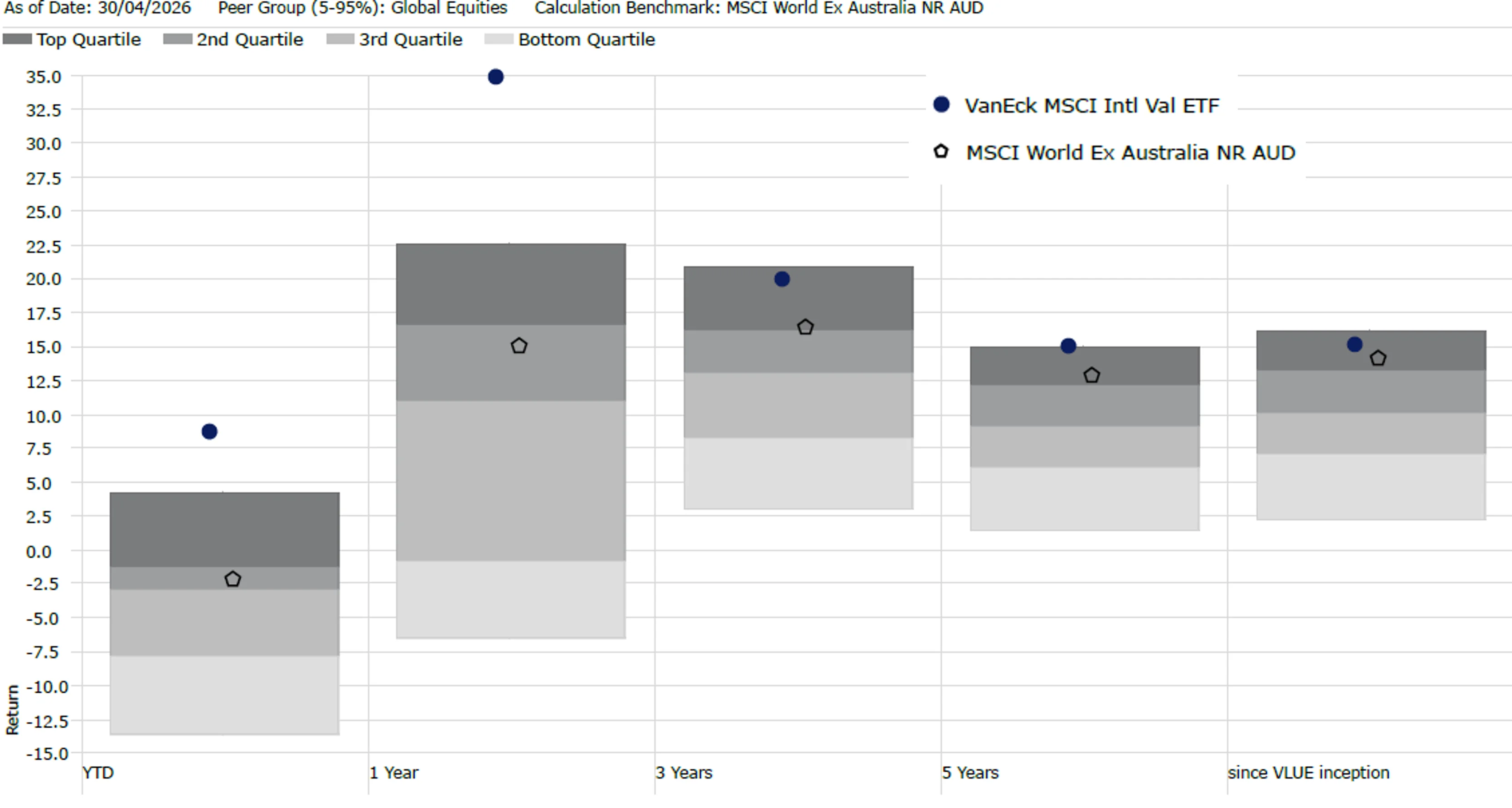
Source: Morningstar, as at 30 April 2026. Past performance is not indicative of future performance. Returns over 1 year are shown annualised. The peer group of Global Equities includes Morningstar’s Open Ended Global Equity Blend Category, Morningstar’s Open Ended Global Equity Growth Category and Morningstar’s Open Ended Global Equity Value Category, which are based on the defined Australian universe of funds that invest primarily in large global companies.
Top performance for low fees
The impressive performance above has been achieved for a fee of just 0.40% p.a., making VLUE one of the lowest-cost managed funds in its peer group. Many of VLUE’s peers charge much higher management fees, generally between 1% and 1.5%. p.a. What this means is that active managers must outperform VLUE by at least the difference between their higher total fees (including performance fees) and VLUE’s lower fees to just break even with VLUE every year.
You can see above, that finding those managers would be difficult, as over the long term only a couple of managers beat VLUE. The reality is many active managers underperform the benchmark, after fees, over the long term, including some of the most popular international equity funds be they value or growth.
Before we launched VLUE, there had only been one way for everyday investors have been able to gain exposure to a ‘value’ portfolio, high-fee active funds focused on identifying ‘value’ opportunities. Because humans are involved, many of these value managers, worried about a decade of underperformance after the GFC, may have started to style drift by taking on growth companies, or investing down the market capitalisation spectrum and investing in small-sized companies.
Additionally, some ‘value’ companies are cheap for a reason, and these could be ‘value traps’. MSCI analysis found that using forward earnings can help protect against ‘value traps’. Additionally, MSCI found that considering whole-firm valuation measures, such as enterprise value, can reduce concentration in leveraged companies.
Therefore, MSCI developed its Enhanced Value Indices, which apply three valuation ratio descriptors on a sector-relative basis:
- price-to-book value - Ratio of the price to the company’s book value or what is on the balance sheet. The lower the price to book, the cheaper the company;
- price-to-forward earnings - A version of the ratio of price-to-earnings (P/E) that uses forecasted earnings for the P/E calculation. The forward earnings are the weighted average of the consensus of analysts’ predicted earnings. The lower the Forward P/E the cheaper the company.; and
- enterprise value-to-cash flow from operations - The ratio of the entire economic value of a company to the cash it produces. When you divide EV by CFO, you're essentially calculating the number of years it would take to buy the entire business if you were able to use all the company's operating cash flow to buy all the outstanding stock and pay off all the outstanding debt. The lower the ratio, the faster a company can pay back the cost of its acquisition, or generate cash to reinvest in its business.
VLUE tracks the MSCI World ex Australia Enhanced Value Top 250 Select Index (VLUE Index). VLUE Index also employs a sector-neutral approach.
VLUE’s sector neutrality has been pivotal to its recent performance. The 2025/26 value rally was broad-based and sector diversified. VLUE's design meant it participated across the full width of the value rotation, not just in one corner of it. I am able to provide attribution details upon request.
We have written about factor investing, and we have many resources available, including a microsite on value investing – here
We have also discussed blending factors for long term portfolios - here
When we launched value, investing in international value required patience and a willingness to look different from the crowd. Many had declared value investing dead. It wasn't. VLUE's five-year track record, built through a pandemic, a rate shock, and an AI-driven market, reflects exactly what disciplined value investing looks like.
Key points of VLUE:
- International companies exhibiting value characteristics
- Long term focus, capturing value across the market cycle
The index is designed to capture a high level of exposure to value while minimising unintended and unwanted sector bets
- Diversified across countries, sectors and companies
Offering investors a portfolio of 250 companies across a range of geographies, sectors and economies
HVLU is an Australian-dollar hedged version of VLUE, so you can now also manage your desired currency exposure
Key risks
An investment in our international value ETF carries risks associated with: ASX trading time differences, financial markets generally, individual company management, industry sectors, foreign currency, country or sector concentration, political, regulatory and tax risks, fund operations, liquidity and tracking an index. See the VanEck MSCI International Value ETF PDS and TMD for more details.
VLUE is likely to be appropriate for a consumer who is seeking capital growth, is intending to use the product as a major, core, minor or satellite allocation within a portfolio, has an investment timeframe of at least 5 years, and has a high risk/return profile.


Published: 13 May 2026
Any views expressed are opinions of the author at the time of writing and is not a recommendation to act.
VanEck Investments Limited (ACN 146 596 116 AFSL 416755) (VanEck) is the issuer and responsible entity of all VanEck exchange traded funds (Funds) trading on the ASX. This is general advice only and does not take into account any person’s financial objectives, situation or needs. The product disclosure statement (PDS) and the target market determination (TMD) for all Funds are available at vaneck.com.au. You should consider whether or not any Fund is appropriate for you. Investments in a Fund involve risks associated with financial markets. These risks vary depending on a Fund’s investment objective. Refer to the applicable PDS and TMD for more details on risks. Investment returns and capital are not guaranteed.
VLUE is not sponsored, endorsed, or promoted by MSCI, and MSCI bears no liability with respect to VLUE, or Parent Index. The PDS contains a more detailed description of the limited relationship MSCI has with VanEck and VLUE.