More yield, more possibilities


While bond yields tend to attract less fanfare among income investors than an increased dividend or term deposit rate, they deserve a place in that conversation.
With Australian government bond yields at a 15-year high, fixed-rate bonds offer an opportunity to earn more income than when yields were lower, with the potential for price gains if yields fall. The next income opportunity may lie beyond the familiar choices.
The state of the nation
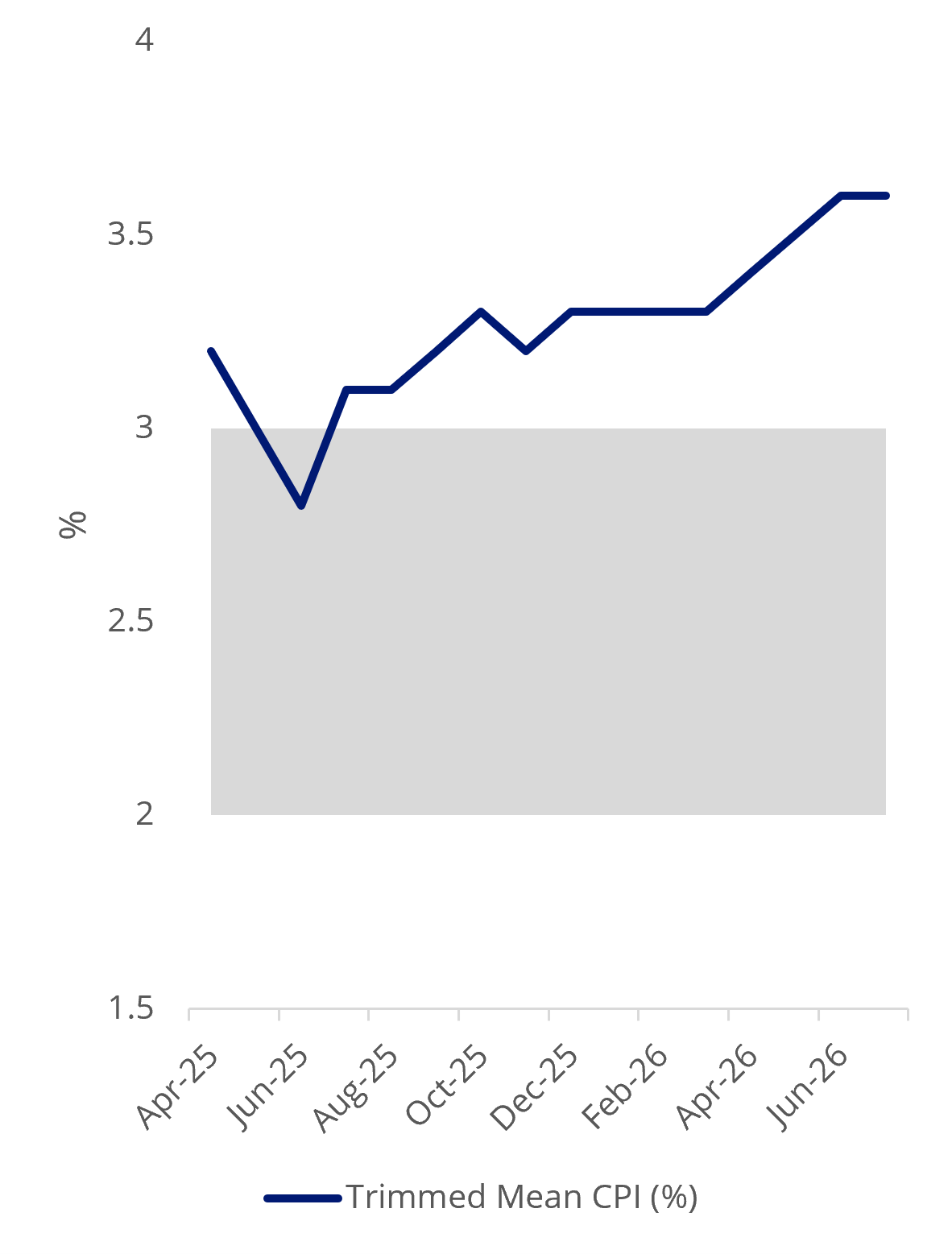
Persistent domestic inflationary pressures have prompted the RBA to deliver four rate hikes in 2026, with markets continuing to price the possibility of another increase before year-end. This tightening cycle has been driven by several underlying factors, including historically low unemployment, elevated services inflation and ongoing energy price pressures.
Geopolitical tensions in the Middle East have added to these pressures by pushing up oil prices. Annual inflation reached 4.0% in August, underscoring the challenge facing the RBA.
Chart 1 and 2: Australian trimmed mean inflation and breakdown by category
 |
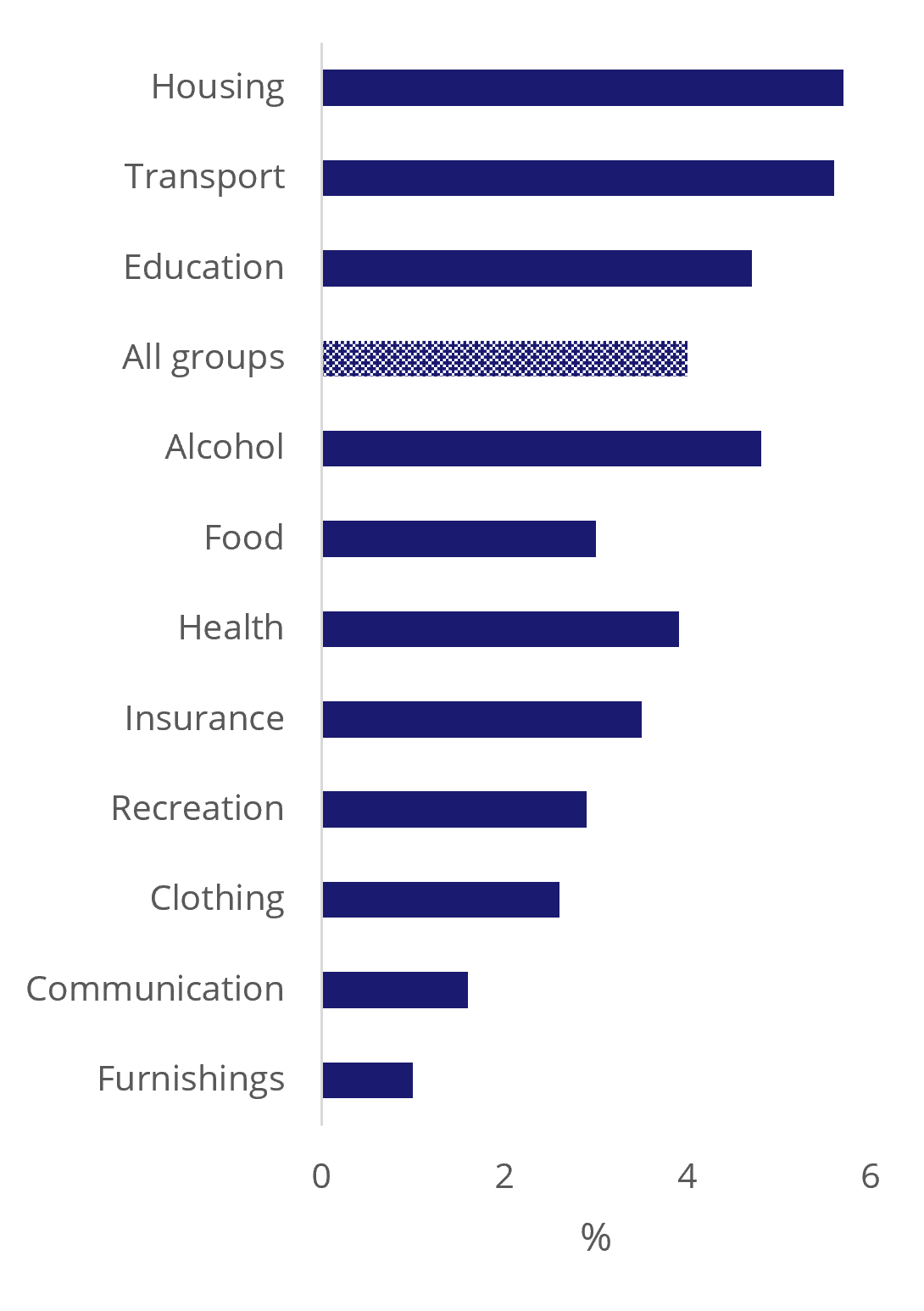 |
Source: Bloomberg, as at 31 August 2026. Shaded area is target CPI
These pressures have pushed longer-term Australian government bond yields higher, with the 10-year yield reaching a 15-year high. But inflation is only part of the picture. Higher oil prices can also slow growth by increasing costs for businesses and households. If weaker growth brings bond yields down, fixed-rate bond prices could rise.
Chart 3: Australian 10-year government bond yield (%)
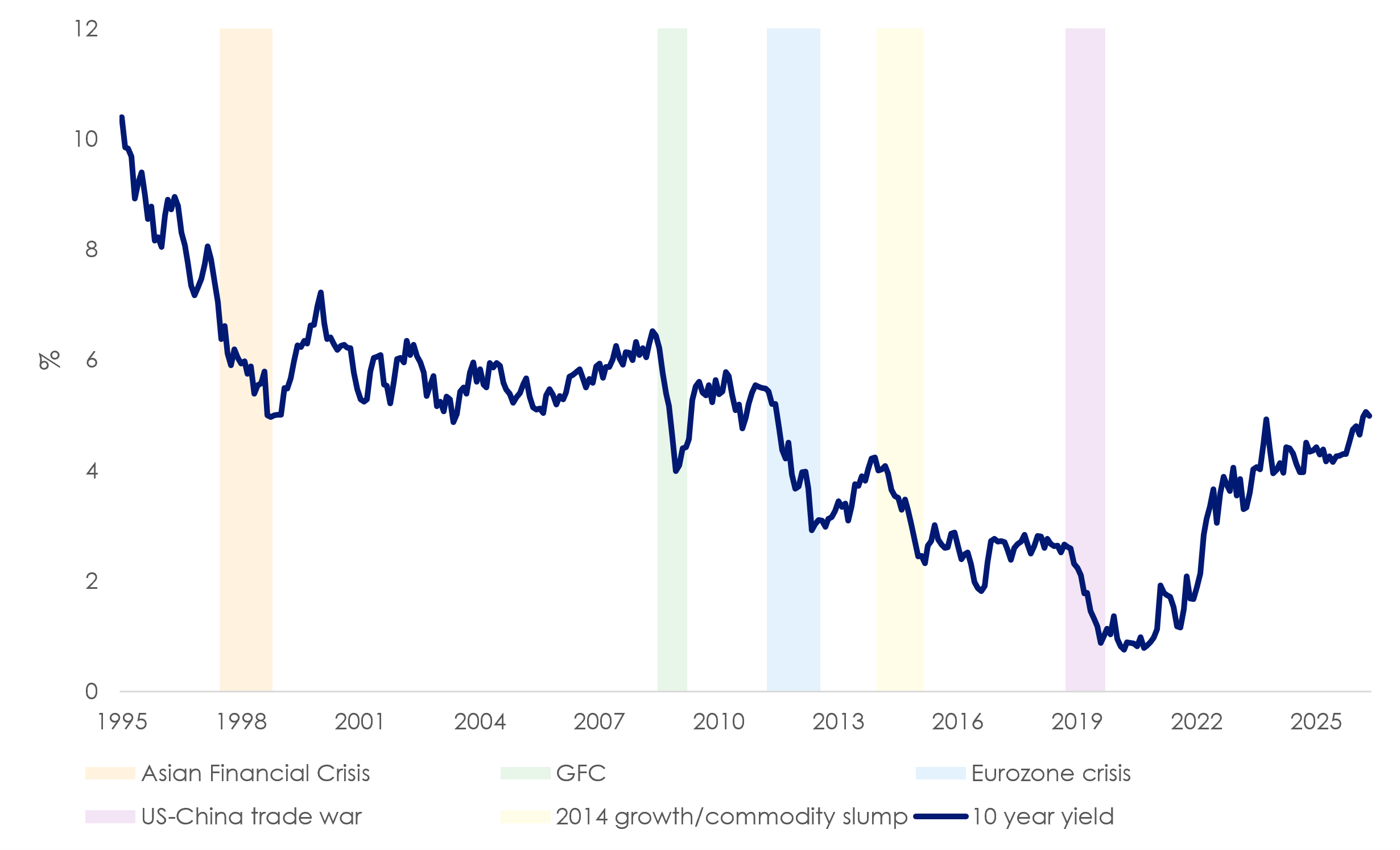
Source: Bloomberg, as at 30 September 2026.
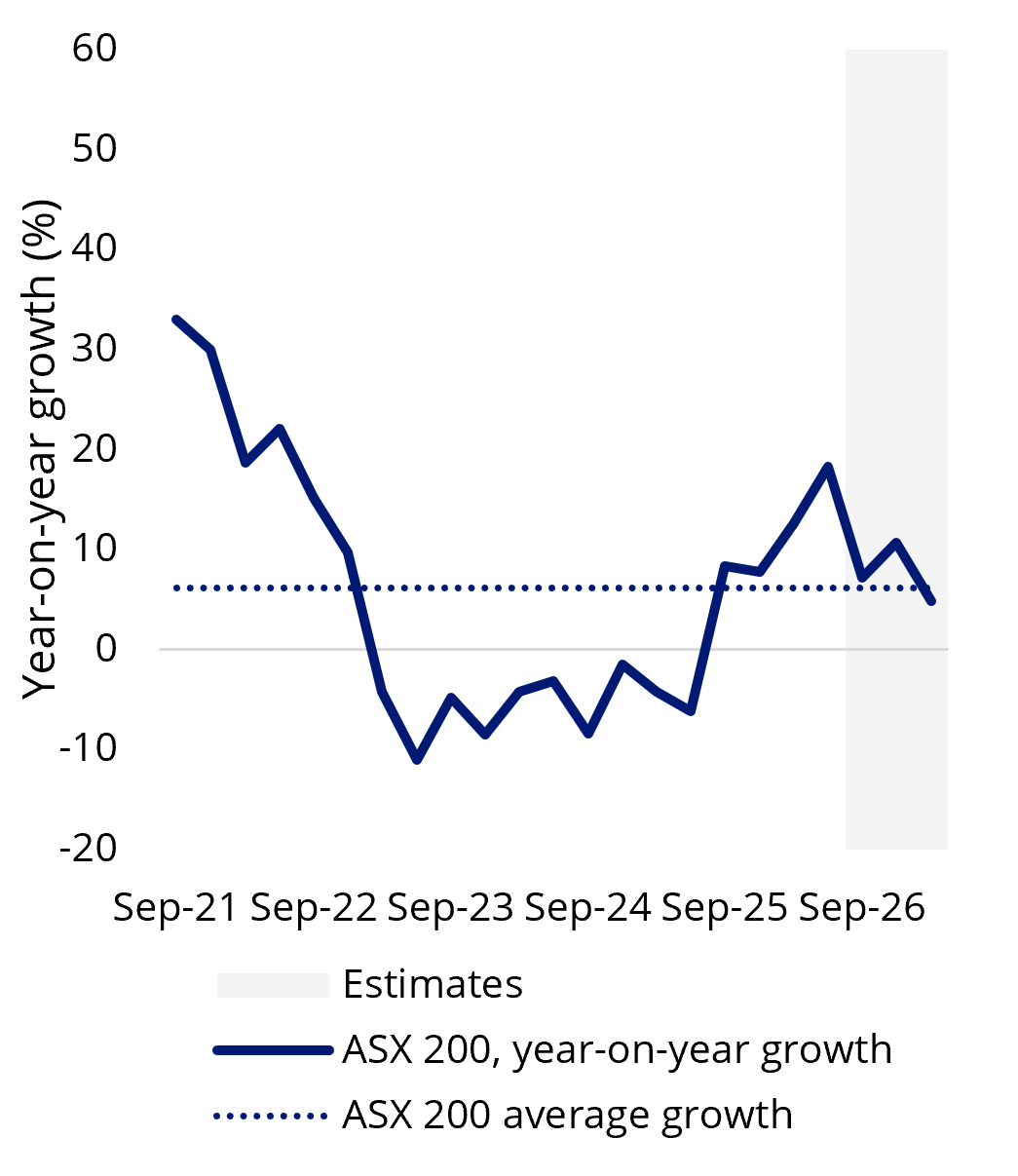
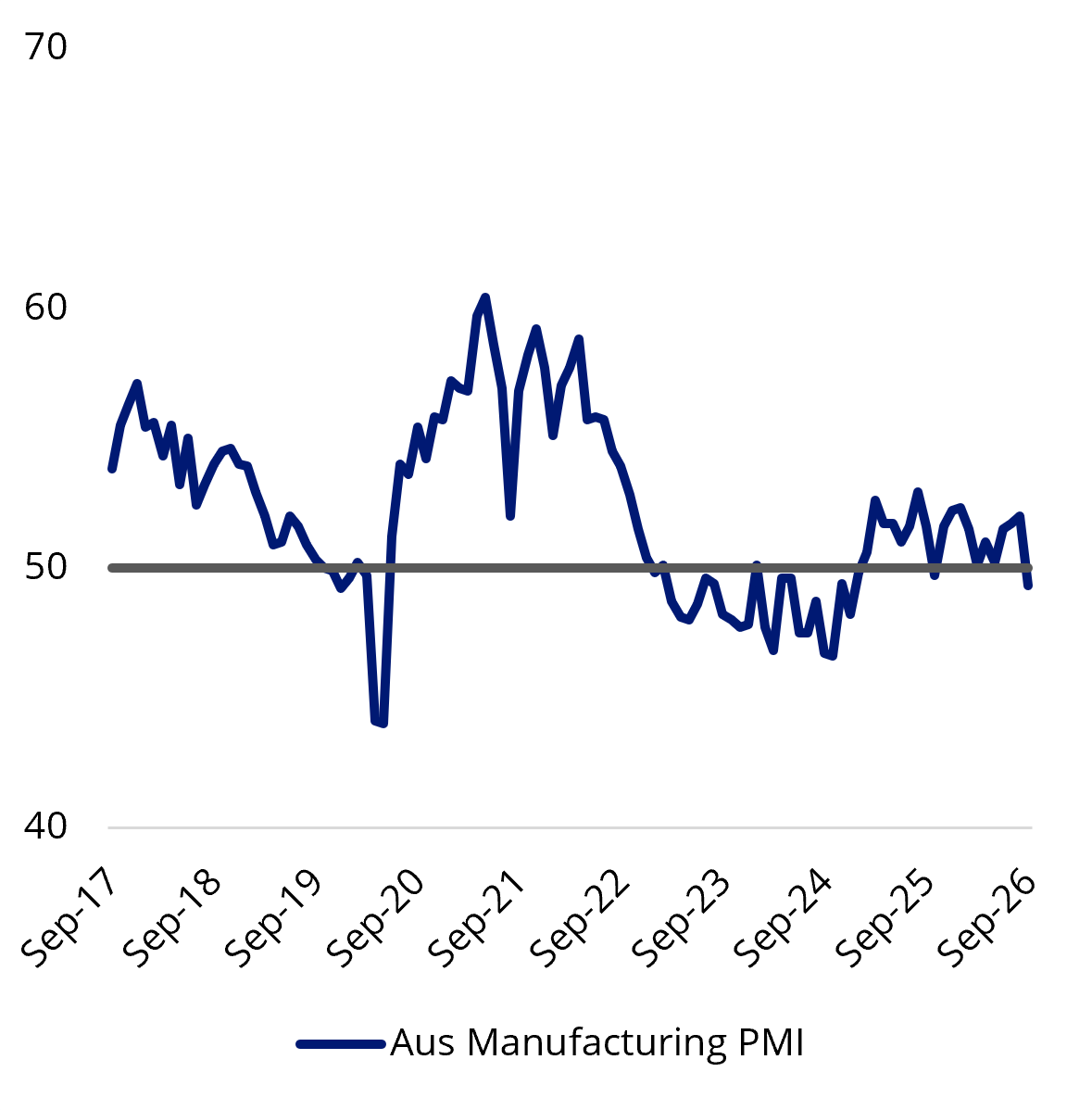
Early signs of softer growth are emerging. Australian corporate earnings expectations have weakened to below trend levels, while manufacturing surveys point to slowing activity. Further RBA rate increases could add to these pressures, especially if the labour market softens further.
This creates a gap between today’s bond yields and the economic outlook. Inflation remains the immediate concern, but weaker growth could become a stronger influence on longer-term yields.
Chart 4 and 5: EPS growth and manufacturing activity
 |
 |
Source: Bloomberg, as at 30 September 2026.
Against this backdrop, fixed-rate bonds warrant consideration. Duration measures how sensitive a bond’s price is to changes in yields: the longer the duration, the larger the potential price movement. Consider three possible outcomes:
Bond yields rise: Fixed-rate bond prices may fall. However, higher starting yields provide more income to help offset those losses.
Yields remain unchanged: Investors are still able to lock in elevated income levels.
Yields fall: Fixed rate bond prices may rise, with longer-duration bonds likely to experience larger gains, alongside the income investors receive.
Portfolio considerations
Floating-rate bonds still have an important role in portfolios. Their interest payments adjust as market reference rates change, helping investors earn more income when those rates rise. Strategies such as VanEck’s Australian Subordinated Debt ETF (SUBD) also have limited price sensitivity to interest rate changes.
Fixed-rate bonds can complement that exposure by offering income alongside the potential for price gains if bond yields fall.
However, with longer-dated bond yields already at historically elevated levels, the opportunity to complement this exposure with fixed-rate duration has become increasingly compelling. Investors can now lock in attractive income levels while capturing greater term premium across the curve.
The VanEck Australian Fixed Rate Subordinated Debt ETF (FSUB) had a yield to worst of 6.45% as at 30 September 2026. This measure estimates the lowest annualised return from the underlying bonds under their contractual repayment terms, assuming no defaults.
Subordinated bonds also rank ahead of shares for repayment if an issuer fails, although they rank behind senior debt and can still incur losses.
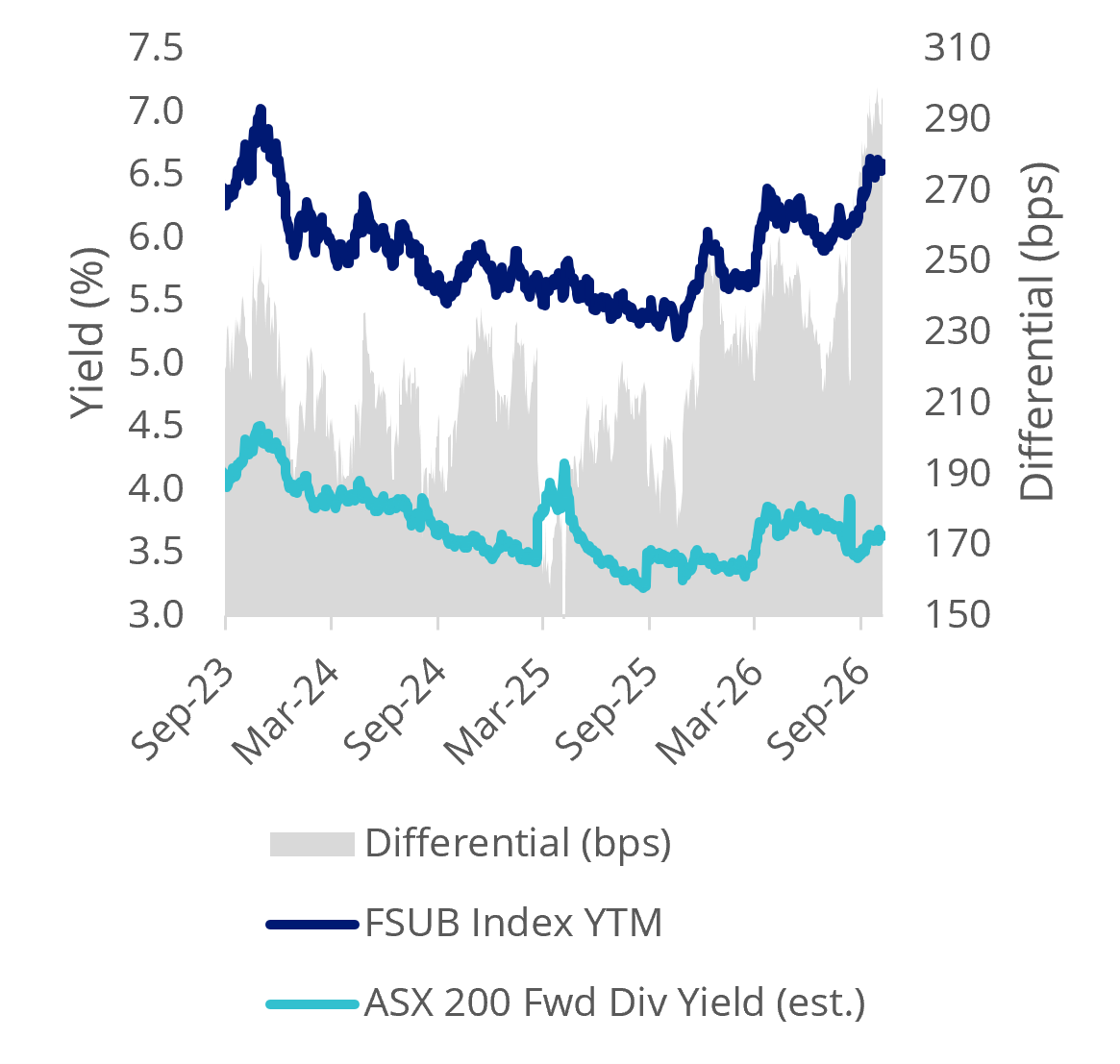
Chart 6 below shows that the gap between FSUB’s index yield to maturity and the ASX 200’s dividend yield is near its highest level this year. While these yields measure different things, the comparison highlights the income opportunity in fixed-rate bonds, rather than a difference in expected total returns.
Chart 6: FSUB Index’s YTM vs S&P/ASX 200 dividend yield
Source: Bloomberg, IHSMarkit. As at 30 September 2026.
Fixed-rate bonds can also help diversify a portfolio. Falling government bond yields may support their prices when economic growth slows. For corporate and subordinated bonds, however, concerns about issuers’ ability to repay can offset that benefit. Combining fixed- and floating-rate exposure gives investors different sources of income and different responses to changing market conditions.
Higher long-end rates may mean fewer losses
Elevated yields may rise from current levels, but they will not necessarily result in negative returns. In many cases, a meaningful increase in yields would be required before capital losses outweigh the income earned over the holding period.
Identifying the exact peak in yields is difficult. Higher starting income can help cushion price falls if yields rise further.
Table: Estimated 12-month return based on various yield change scenarios
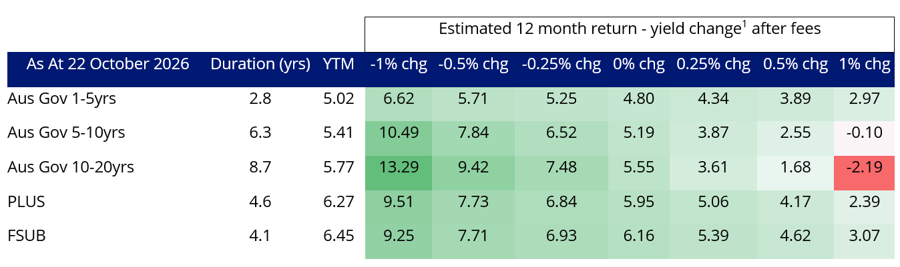
1 -Estimated 12 month return = current YTM + yield change – duration * yield change – annual management fee. These are estimations only based on available data. Not a recommendation to act. Estimated returns are based on various assumptions about the future and are not indicative of fund or yield performance and cannot be guaranteed. Aus Gov 1-5yrs is VanEck 1-5 Year Australian Government Bond ETF, Aus Gov 5-10yrs is VanEck 5-10 Year Australian Government Bond ETF, Aus Gov 10-20yrs is VanEck 10+ Year Australian Government Bond ETF, PLUS is VanEck Australian Corporate Bond Plus ETF, FSUB is VanEck Australian Fixed Rate Subordinated Debt ETF.
There is more to an income portfolio than the next dividend announcement or term deposit renewal. Higher bond yields have strengthened the case for adding fixed-rate exposure, with income to help cushion price falls and potential gains if yields decline. FSUB and SUBD offer two ways to put that opportunity to work. Investors cannot control the next move in rates, but they can broaden where their next dollar of income comes from.
Key risks
All investments have risks. An investment in our fixed income funds carries risks associated with: bond markets generally, interest rate movements, issuer default, credit ratings, fund operations, liquidity, securitisation market, issuer concentration, subordinated debt and tracking an index. Please read the relevant product disclosure statement and target market determination on vaneck.com.au for details.

Published: 23 October 2026
Any views expressed are opinions of the author at the time of writing and is not a recommendation to act.
VanEck Investments Limited (ACN 146 596 116 AFSL 416755) (VanEck) is the issuer and responsible entity of all VanEck exchange traded funds (Funds) trading on the ASX. This information is general in nature and not personal advice, it does not take into account any person’s financial objectives, situation or needs. You should consider whether or not an investment in any Fund is appropriate for you. Investments in a Fund involve risks associated with financial markets. These risks vary depending on a Fund’s investment objective. Refer to the applicable product disclosure statement (PDS) and target market determination (TMD) available at vaneck.com.au for more details. Investment returns and capital are not guaranteed.